[FIN]CROSS-BORDERVOL: $4.2T
[SEC]CYBER ALERT: TIER2
[POL]IS0 GROWTH:+14%
[GEO] CLOUDINDEX: +2.4%

Structural Logic
Category Filters
How to prevent nutrient runoff from aquaculture waste management
Lead Author
Published
Views:
Nutrient runoff usually becomes visible only after it has already moved beyond the farm boundary: an outlet sample shows elevated nitrogen or phosphorus, water near a discharge point becomes turbid, algae develop in a receiving channel, or solids accumulate where they should not. In aquaculture operations, the source is rarely a single failure. Excess feed, suspended feces, sludge handling, rainfall, draining procedures, and poorly timed cleaning can all combine to carry dissolved and particulate nutrients into surrounding water.
The practical answer is to control nutrients before water leaves each production area. That means reducing nutrient inputs at feeding, separating solids quickly, holding or treating wastewater long enough for the chosen process to work, and verifying performance at defined monitoring points. In Aquaculture & Fishery waste management, runoff prevention is not simply a waste-disposal task; it is an operating discipline that links feeding records, water flow, sludge removal, infrastructure condition, and discharge decisions.
Start by locating the nutrient pathway, not just the discharge point
A final outlet may be where runoff is measured, but it is often not where the problem begins. Quality and safety personnel should map the route taken by feed residues, fecal solids, dissolved ammonia, nitrate, phosphorus, wash water, and stormwater. The map should include production tanks or ponds, raceways, settling units, harvest areas, filter backwash lines, sludge storage, mortality handling areas, drainage ditches, and every overflow route.
Particular attention is needed where clean water and dirty water can mix. A stormwater drain that receives equipment washdown, a pond embankment that overtops during heavy rainfall, or a sludge pad without runoff containment can bypass the main treatment train completely. These routes can create intermittent nutrient releases that routine sampling misses.
Trace each source using simple questions:
- Where are solids first generated and where are they expected to settle?
- Which pipes, channels, or valves carry water during normal operation?
- What changes during tank cleaning, grading, harvesting, emergency draining, or heavy rain?
- Can settled sludge be resuspended before removal?
- Does runoff from feed storage, chemical handling, or vehicle areas enter process water or surface drains?
- Which discharge route is active when pumps fail, screens clog, or water levels rise unexpectedly?
Walking the site during both routine production and a non-routine event is more useful than reviewing a flow diagram alone. A drainage route that appears isolated on paper may receive water when a gate is opened, a sump reaches capacity, or staff hose down a floor.
Reduce the nutrient load at feeding
Feed is the largest controllable nutrient input in most culture systems. Any feed that is not consumed becomes a direct source of nitrogen, phosphorus, oxygen demand, and suspended solids. Even when feed is eaten, inefficient feeding can increase waste because poor feed conversion produces more fecal material and dissolved metabolic waste per unit of production.
A runoff-control program should therefore begin with feeding controls rather than relying solely on downstream treatment. Match ration size to biomass, species behavior, water temperature, dissolved oxygen conditions, and recent feeding response. Feeding plans should be adjusted when fish are stressed, when water quality is deteriorating, during disease-related restrictions, or when handling activities reduce appetite.
Observe consumption rather than treating a scheduled ration as automatically correct. In ponds, uneaten pellets may drift to edges, collect in dead zones, or sink into sediment. In tanks and raceways, they may pass through before fish consume them. Feed trays, cameras, surface observation, automated feeder logs, and timed checks can all help identify whether feed is disappearing because it is consumed or because it is being washed away.
Feeding records should support corrective action
Records are most useful when they reveal change. A sudden increase in feed offered without a corresponding change in biomass, a recurring amount of uneaten feed at one unit, or higher waste output after a feed formulation change deserves investigation. Record feed delivery by production unit, not only as a site total. This makes it possible to identify a particular tank, pond, or feeding zone that is producing disproportionate solids.
Feed storage matters as well. Spilled or degraded feed can become a runoff source around warehouses and loading areas. Keep bags, bulk systems, and transfer points protected from rainfall; collect spillage promptly; and prevent outdoor cleaning water from entering storm drains. These basic controls are easy to overlook because they sit outside the culture area, yet they can contribute concentrated phosphorus to runoff.
Capture solids before they break down
Particulate waste is easier to remove than dissolved nutrients. Once feces and feed fines remain in water long enough to fragment and decompose, nitrogen and phosphorus become harder to manage. The operational objective is to move solids from water into a controlled waste stream quickly, while minimizing the amount of water removed with them.
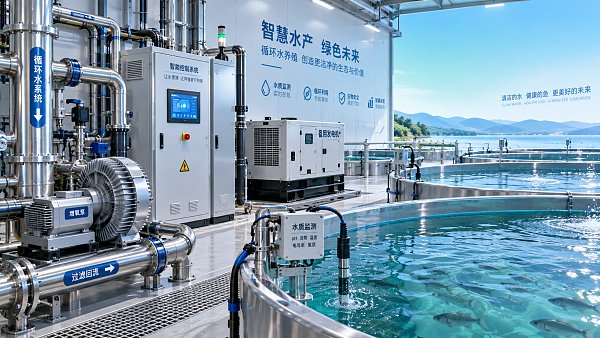
In tank-based systems, effective approaches may include appropriately sized screens, drum filters, swirl separators, radial-flow settlers, cone-bottom tanks, central drains, and low-turbulence collection zones. In ponds, solids may concentrate near feeding areas, aeration patterns, inlet zones, or low points, so harvesting or desludging plans need to reflect actual deposition patterns rather than assumptions.
Equipment selection alone does not guarantee capture. A screen can be correctly specified but ineffective when bypass flows develop, spray bars are poorly maintained, mesh is damaged, or cleaning cycles send concentrated backwash directly to an untreated outlet. Settling units lose performance when hydraulic loading rises above their capacity, short-circuiting occurs, or accumulated sludge occupies the volume intended for settling.
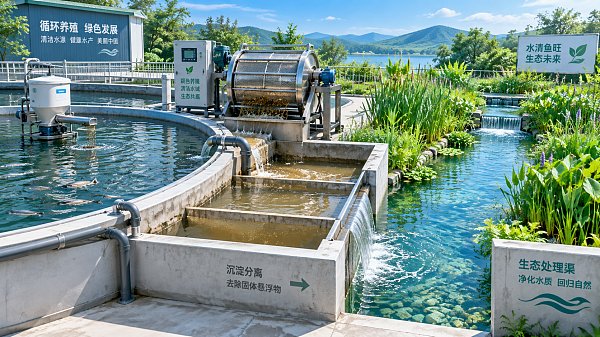
Inspect solids-separation equipment under operating flow. Look for unusual turbulence, leakage around screens, water traveling directly from inlet to outlet, and sludge blankets that are too deep. A rise in turbidity downstream of a separator may indicate worn components, excessive flow, or more fine solids entering than the process can handle. The correction may be upstream—such as changing feed delivery or reducing disturbance—not merely installing a larger unit.
Keep sludge separate from wastewater
Collected sludge is not “removed” if it is stored where rainfall, overflow, or drainage can wash nutrients back into the environment. Sludge from filters, settlers, pond cleaning, and backwash lines should enter a defined handling route with containment, controlled dewatering, and a planned destination. The chosen method depends on site layout, waste volume, moisture content, and local disposal or land-application requirements, but the principle is consistent: prevent uncontrolled contact between concentrated waste and surface water.
Dewatering can reduce transport volume and make handling more manageable, but drainage from dewatering areas must be treated as nutrient-bearing liquid. It should return to the treatment system or enter a dedicated containment process, not flow across unprotected ground. Covered storage, bermed pads, sealed containers, protected drainage, and regular removal schedules reduce the risk that stored sludge becomes a secondary runoff source.
Land application, where permitted and appropriately managed, requires particular care. Application rates should account for the nutrient content of the material, soil condition, crop demand, slope, forecast rainfall, and setback distances from water bodies and drains. Applying sludge simply because storage is full creates a high-risk condition, especially on saturated, frozen, compacted, or sloped ground.
Use treatment stages that match the form of the nutrient
Nutrient control is more reliable when treatment is arranged in stages. Solids removal should generally occur first because excessive suspended matter can interfere with later processes. After that, the remaining wastewater may need settling, biological treatment, vegetated polishing, controlled reuse, or other methods suited to the system and site constraints.
Biological processes require stable conditions. Systems intended to convert ammonia or reduce nitrogen can lose effectiveness when loading changes abruptly, dissolved oxygen falls, pH shifts outside the process range, or disinfectants and cleaning agents enter the treatment stream. Any chemical used for sanitation or disease control should be evaluated for its effect on downstream biological treatment and for the route taken by rinse water.
Vegetated channels, constructed wetlands, or retention areas can provide polishing where they are appropriately designed and maintained, but they should not be treated as an unlimited sink. High solids loading can clog flow paths, create short-circuiting, and reduce treatment contact. Vegetation management, sediment removal, inlet protection, and hydraulic inspection are part of performance control.
Plan for rainfall, cleaning, and other high-risk periods
Routine discharge may be stable while non-routine activities create the largest releases. Draining a production unit, backwashing filters, moving fish, cleaning tank walls, flushing pipelines, or emptying a settling basin can release concentrated material over a short period. Schedule these activities so that the receiving system has available capacity, and avoid combining several high-load tasks at once.
Rainfall deserves a separate response plan. Check pond freeboard, ditch capacity, embankment condition, sump alarms, emergency overflow locations, and the integrity of covers or berms around feed and sludge storage. Keeping stormwater separate from process water reduces the total volume that requires treatment and prevents clean runoff from becoming contaminated.
Where stormwater cannot be fully separated, identify first-flush areas: loading zones, feed transfer points, waste-handling pads, and heavily trafficked surfaces where organic residues can accumulate. Cleaning these areas before forecast rainfall may prevent a preventable nutrient pulse. Do not use high-pressure washing as a substitute for dry cleanup; it can turn a contained spill into a drainage problem.
Monitor trends that reveal loss of control
Sampling only at the final discharge can show that a problem exists, but not why it occurred. A more useful monitoring plan includes points before and after solids removal, at treatment inlets and outlets, near sludge drainage, and at any location where stormwater could mix with process water. The exact parameters and frequency should reflect the operating permit, receiving environment, production system, and known risks.
Common indicators include total suspended solids, turbidity, ammonia, nitrate or nitrite where relevant, total nitrogen, phosphorus, pH, dissolved oxygen, flow, and visual observations. Flow measurement is important because concentration alone does not show total nutrient loading. A moderate concentration released during a high-flow event may represent a larger nutrient loss than a higher concentration in a small controlled discharge.
Trend review should connect water results with operational records. Compare unusual readings with feed changes, mortality events, rainfall, maintenance activity, fish biomass, chemical use, filter alarms, and sludge-removal intervals. A single result may require confirmation; repeated changes linked to the same operating condition point toward a correctable cause.
Define action triggers before a result becomes urgent
Set internal response triggers that are meaningful for the facility, rather than waiting only for a formal exceedance or visible environmental impact. Examples include increasing turbidity after a separator, repeated uneaten feed observations, rising ammonia in a recirculating loop, reduced settling performance, or unexpected water volume in a sludge area. Each trigger should have an assigned response: inspect a valve, reduce feeding, clean a screen, remove sludge, adjust flow, investigate drainage, or collect a confirmation sample.
Personnel need clear authority to make short-term protective changes. When a drain is carrying visibly contaminated water, delaying action until a management review can turn a small operational issue into a discharge event. Emergency procedures should identify who can stop flow, isolate a line, deploy temporary containment, document the event, and restart the system only after the cause is understood.
Turn runoff prevention into routine control
The most durable improvement is a short set of operating procedures tied to daily work. Feeding staff should know how to report poor consumption. Maintenance staff should understand which drains are process drains and which are storm drains. Teams handling sludge should know where drainage must go and what weather conditions require postponement. Supervisors should review whether corrective actions were completed, not only whether a form was filled in.
Periodic inspections should focus on conditions that change: screen wear, blocked channels, damaged berms, accumulated sediment, failing pumps, unsecured covers, altered flow paths, and new equipment connections. After any modification to tanks, drainage, treatment units, or cleaning practices, update the site flow map and verify that the change has not created an untreated bypass.
Preventing nutrient runoff depends on keeping waste concentrated, separated, and measurable. When feed input is controlled, solids are removed early, sludge is contained, treatment capacity is protected, and abnormal flows are acted on quickly, nutrient losses become easier to identify and far less likely to reach surrounding waters.
Tags
Recommended for You
 How to prevent nutrient runoff from aquaculture waste managementAquaculture & Fishery waste management: prevent nutrient runoff with smarter feeding, solids capture, sludge control, treatment, and monitoring.Oct 04, 2026Marcus Trust
 How to verify safety documentation when buying organic solvents wholesaleOrganic solvents wholesale buyers: learn how to verify SDS, CoA, labels, batch traceability, and transport records before delivery. Reduce compliance risks and purchase with confidence.Oct 03, 2026Marcus Trust
 What hygiene standards should a stainless steel cattle slaughtering line meet?Stainless steel cattle slaughtering line hygiene standards: explore hygienic design, zoning, drainage, sanitation, and compliance essentials for safer beef processing.Oct 02, 2026Marcus Trust
 Digital classroom integration examples that improve lesson flowDigital classroom integration examples that improve lesson flow, connect teaching tools, streamline support, and create reliable, engaging learning experiences.Oct 01, 2026Professor Sarah Ed
 Which CE documents should accompany peanut shelling machines?Peanut shelling machines CE guide: learn which documents—Declaration of Conformity, manuals, technical files, and risk assessments—protect imports and compliance.Sep 30, 2026Marcus Trust
 How to verify whether organic Tribulus terrestris extract is certifiedVerify tribulus terrestris extract organic certification with confidence. Learn how to check certificate scope, botanical identity, certifier validity, lot traceability, and processing details.Sep 29, 2026Marcus Trust
 How to prevent uneven feed in a stainless liquid adding machineStainless liquid adding machine feed issues? Learn practical ways to prevent uneven dosing, reduce air leaks, stabilize flow, and improve production consistency.Sep 28, 2026Lina Cloud
 How to verify aquaculture utilities compliance before a site auditAquaculture utilities compliance: learn how to verify water, power, wastewater, alarms, and records before a site audit to reduce risk and prove control.Sep 27, 2026Marcus Trust
 How to size a tunnel oven for a biscuits factory’s target outputTunnel oven for biscuits factory sizing: learn how to match output targets, band loading, bake time, zones, and cooling capacity for reliable production.Sep 26, 2026Lina Cloud
 What purity specifications matter when sourcing bulk magnesium stearate in North America?Bulk magnesium stearate North America buyers: learn the purity specifications that protect quality, compliance, and production performance.Sep 25, 2026Marcus Trust
 How classroom devices can support healthier screen time habitsScreen time classroom devices can build healthier learning habits when lessons balance focus, movement, collaboration, and purposeful digital tasks. Explore practical strategies today.Sep 24, 2026Professor Sarah Ed
 How often should digital signage content refresh for retail displays?Digital signage content refresh rate for retail displays: discover practical schedules for campaigns, pricing, live updates, and customer engagement.Sep 23, 2026Digital Signage
 How to compare wholesale water pumps for farming by flow rateWholesale water pumps for farming factory guide: compare flow rate, total dynamic head, efficiency, and supplier testing to select reliable irrigation pumps.Sep 22, 2026Lina Cloud
 How North America's service-led economy is changing CRM prioritiesService-led Economy North America is reshaping CRM priorities around customer lifecycle, service data, privacy, payments, and connected experiences. Explore practical strategies for smarter CRM investment.Sep 21, 2026Lina Cloud
 What drives carrageenan gum price differences between suppliers?Carrageenan gum price differences reflect grade, dosage efficiency, quality control, certifications, and supply reliability. Compare true landed cost to choose the best-value supplier.Sep 20, 2026Marcus Trust
 How to choose rugged smart terminals for cold storage operationsRugged smart terminals for cold storage: learn how to evaluate batteries, scanning, wireless coverage, glove usability, and durability for reliable operations.Sep 19, 2026Digital Signage
 What makes smart terminals for healthcare suitable for clinical workflows?Smart terminals for healthcare improve clinical workflows with secure integration, hygienic design, reliable connectivity, and lifecycle control. Explore key evaluation factors.Sep 18, 2026Dr. Hideo Tanaka
 What drives pharmaceutical packaging materials price changes?Pharmaceutical packaging materials price changes explained: assess commodity costs, capacity, compliance, logistics, and supplier risk to negotiate smarter.Sep 17, 2026Marcus Trust
 How to vet ODM suppliers using sourcing intelligenceSourcing Intelligence helps you vet ODM suppliers beyond price—verify capabilities, compliance, quality controls, and supply-chain resilience before launch.Sep 16, 2026Lina Cloud
 What drives seafood packaging machine price differences?Seafood packaging machine price differences reflect automation, hygiene, format flexibility, and service scope. Compare costs wisely to improve uptime and pack quality.Sep 15, 2026Marcus Trust
 How to verify a medical equipment certification service before hiringMedical equipment certification service verification guide: check accreditation scope, market recognition, technical competence, report traceability, and contract terms before hiring.Sep 14, 2026Marcus Trust
 What to check before choosing a drip irrigation systems factoryDrip irrigation systems factory checklist: assess quality control, materials, hydraulic performance, compatibility, compliance, and delivery reliability before buying.Sep 13, 2026Lina Cloud
 How to verify that apple cider vinegar powder is food gradeApple cider vinegar powder food grade verification: review identity, COAs, supplier controls, contaminants, legal compliance, and traceability for confident sourcing.Sep 12, 2026Marcus Trust
 What should you verify before choosing a ledger management supplier?Ledger management supplier checklist: verify posting integrity, audit trails, security, integrations, reconciliation, resilience, and exit readiness before you commit.Sep 11, 2026Lina Cloud
 What throughput should a commercial shrimp peeling machine deliver?Shrimp peeling machine commercial factory guide: calculate stable saleable throughput, protect yield, and balance inspection, freezing, packing, and labour capacity.Sep 10, 2026Lina Cloud
 What POS integration should restaurant AI ordering kiosks support?Restaurant AI ordering kiosks need reliable POS integration for menus, payments, kitchen routing, loyalty, and resilient order management. Discover what to require.Sep 09, 2026Dr. Hideo Tanaka
 How to verify the purity of wholesale witch hazel extractWholesale witch hazel extract purity verification: learn how to review CoAs, confirm botanical identity, test contaminants, and strengthen batch traceability.Sep 08, 2026Marcus Trust
 How to choose feed ingredients for aquaculture by digestible proteinFeed Ingredients for aquaculture: learn how to compare digestible protein, amino acids, quality consistency, and real formulation cost for stronger feed performance.Sep 07, 2026Marcus Trust
 What drives the total cost of restaurant AI ordering kiosks?Restaurant AI ordering kiosks: uncover the real costs of hardware, AI software, payments, integration, installation, security, and support before you invest.Sep 07, 2026Dr. Hideo Tanaka
 How can a factory supplier choose the right business intelligence tool?Business intelligence tool factory supplier guide: compare data integration, governance, security, costs, and pilots to choose BI that protects margins and delivery.Sep 05, 2026Lina Cloud
 What should schools check in a smart school API integration?Smart school API integration requires more than connectivity. Discover how to evaluate security, data governance, scalability, reliability, and compliance before approving a solution.Sep 04, 2026Professor Sarah Ed
 What determines Primary Processing pricing for small business card payments?Primary Processing price explained: compare rates, fixed fees, card mix, contracts, and tools to find the most cost-effective payment solution for your small business.Sep 03, 2026Dr. Marcus Fin
 How to choose bulk carrier oils for hair care formulationsBulk carrier oils for hair care: learn how to assess stability, fatty-acid profiles, supplier controls, and packaging compatibility for reliable formulations.Sep 02, 2026Lina Cloud
 How to verify quality when buying wholesale sodium chlorite solutionWholesale sodium chlorite solution: learn how to verify concentration, purity, COAs, packaging, supplier controls, and contract terms for safer, dependable bulk purchasing.Sep 01, 2026Marcus Trust
 What can food processors learn at Agri Processing Middle East?Agri Processing Middle East reveals practical insights on food processing technology, traceability, packaging, quality systems, and resilient regional supply chains.Aug 31, 2026Lina Cloud
 What drives echinacea purpurea extract price differences?Echinacea purpurea extract price: discover how plant part, standardization, testing, certifications, and supply terms shape true ingredient value.Aug 30, 2026Marcus Trust
 What determines the price of commercial neoprene chest waders?Commercial neoprene chest waders price depends on insulation, seams, boots, durability, and order volume. Compare specifications to secure reliable value for demanding work.Aug 29, 2026Marcus Trust
 How to verify barley grass powder for supplements meets safety standardsBarley grass powder for supplements: learn how to verify identity, contaminant testing, traceability, CoAs, and packaging controls for safer sourcing.Aug 28, 2026Marcus Trust
 How to choose bulk carbon black for plastics by dispersion qualityBulk carbon black for plastics: learn how to evaluate dispersion quality, reduce defects and scrap, and select grades that deliver reliable processing, appearance, and value.Aug 27, 2026Lina Cloud
 How specification guides help verify REACH compliance before sourcingSpecification Guides REACH compliance starts with better sourcing checks. Learn how to verify supplier claims, reduce compliance risk, and avoid costly surprises before procurement.Aug 26, 2026Marcus Trust