[FIN]CROSS-BORDERVOL: $4.2T
[SEC]CYBER ALERT: TIER2
[POL]IS0 GROWTH:+14%
[GEO] CLOUDINDEX: +2.4%
Structural Logic
Category Filters
How do payment app encryption layers protect card data?
Lead Author
Published
Views:
A payment app may process card data across mobile devices, networks, gateways, and cloud systems, creating multiple points where sensitive information needs protection.
Payment app encryption layers reduce exposure by securing data at rest and in transit, while controls such as tokenization and key management limit how and where card details are used.
For technical evaluators, understanding how these safeguards work together is essential to assessing architecture, identifying security gaps, and supporting PCI DSS compliance.
The central question is not whether an application uses encryption, but where card data becomes readable, who can access it, and how cryptographic keys are controlled.
Where Do Payment App Encryption Layers Protect Card Data?
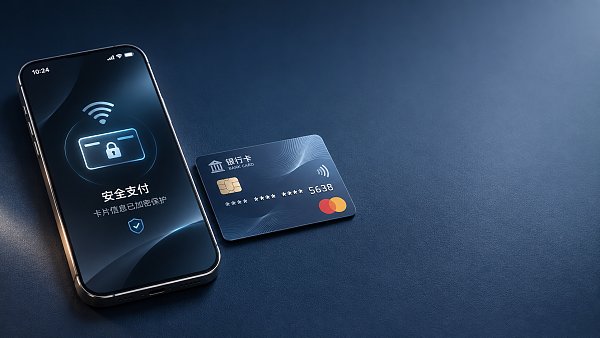
A typical payment flows from card capture through an application or terminal, across a network to a payment gateway, and onward to processors and card networks.
Encryption can protect different segments of that journey, but each layer has a defined endpoint. Data may be decrypted at a gateway, processor, or other authorized component.
For example, TLS protects traffic between a mobile app and a gateway. It does not automatically protect plaintext from the gateway application that terminates the connection.
Similarly, database encryption can reduce exposure from stolen storage media, but it may not stop an attacker who compromises an authorized application or its credentials.
Evaluators should request a data flow diagram showing capture points, encryption and decryption boundaries, systems that handle plaintext, storage locations, and connections to external providers.
The strongest architecture minimizes the number of components that can see card data and applies independent controls to the components that must handle it.
What Happens When Card Details Are Captured?
Card data may enter through a mobile form, a hosted payment page, a software development kit, a contactless reader, or a dedicated payment terminal.
The capture method matters because encryption cannot protect information from every threat before encryption occurs. A compromised device or malicious input component may expose data first.
Provider-hosted fields or a payment SDK can send card details directly to the payment provider, reducing the merchant backend's exposure when implemented as intended.
However, the surrounding application can still influence the payment experience. Tampered app code, compromised dependencies, or malicious scripts may intercept data or redirect users.
For physical terminals, examine the device's approval status, tamper protections, software integrity controls, maintenance procedures, and how the reader communicates with the payment application.
PCI Point-to-Point Encryption, or P2PE, is a specific PCI standard for validated solutions. It should not be confused with any product simply described as end-to-end encrypted.
Where PCI P2PE is claimed, verify the solution listing, covered components, deployment conditions, and the provider's current instructions. Validation does not eliminate merchant responsibilities.
Also distinguish payment card chip cryptograms from general-purpose data encryption. Chip transactions use cryptographic mechanisms to help authenticate transactions, but they do not replace other protections.
How Is Card Data Protected in Transit?
Transport Layer Security, or TLS, encrypts traffic between two endpoints and helps detect modification in transit. Correct certificate validation also authenticates the server to the client.
In practice, confirm that payment-related connections use current, supported TLS configurations and that applications reject invalid, expired, or untrusted certificates without unsafe fallback behavior.
Map every connection separately: app to gateway, terminal to provider, gateway to processor, and internal service to service. One protected connection does not secure the others.
Mutual TLS may provide additional client authentication for suitable service integrations. Its value depends on certificate issuance, rotation, revocation, and secure private key storage.
Certificate pinning can limit trust to specified certificates or public keys, but requires a reliable rotation strategy. Poorly managed pins can interrupt legitimate payment traffic.
Transport encryption also does not prevent sensitive data from entering URLs, application logs, crash reports, or analytics events before transmission. Review these paths explicitly.
What Protects Stored Card Data and Backups?
Data at rest may be protected through database encryption, storage encryption, application-level encryption, or a combination. Each approach addresses different threats and trust boundaries.
Storage-level encryption can help when disks or backups are lost. Application-level encryption can provide more granular protection when keys and access controls are appropriately separated.
Neither method makes unrestricted storage desirable. The most effective reduction in exposure is to avoid retaining sensitive card data unless a legitimate business need exists.
Ask which fields are stored, why they are needed, where copies exist, and when each copy is deleted, including replicas, backups, support exports, and test environments.
PCI DSS generally prohibits storing sensitive authentication data after authorization, even if encrypted. This includes card verification codes and full track data, subject to limited issuer exceptions.
When a primary account number, or PAN, must be stored, PCI DSS specifies ways to render it unreadable. Confirm the applicable requirements and implementation details with the assessor.
Retention schedules should be technically enforceable and tested. A deletion policy has limited value if old backups or unmanaged exports retain card data indefinitely.
How Do Tokenization and Encryption Work Together?
Encryption transforms data using a key and is designed to be reversible by an authorized party. Tokenization substitutes a value that references or represents the original data.
A merchant might store a payment token for recurring billing while the provider retains the underlying PAN. A breached merchant database would then expose fewer usable card details.
Tokenization is not automatically encryption, and implementations vary. Some tokens are reversible through a token vault; payment network tokens can have different lifecycle and usage controls.
Assess whether a token is restricted to a merchant, device, transaction type, or payment channel, and whether an attacker could use it to initiate unauthorized payments.
Ask who operates the token service, how detokenization is authorized, whether tokens are portable between providers, and what happens during provider migration or service disruption.
Tokens can reduce the amount of cardholder data handled by merchant systems, but they do not automatically remove systems from PCI DSS scope or eliminate fraud risk.
Why Is Key Management as Important as Encryption?
Strong encryption offers limited protection if attackers can obtain both encrypted data and the keys needed to decrypt it. Key management establishes that separation.
Start by identifying where keys are generated, stored, used, rotated, revoked, and destroyed. Determine which personnel and systems can request cryptographic operations.
Hardware security modules, or HSMs, can protect keys and perform cryptographic operations within a controlled boundary. Their effectiveness depends on configuration and operational governance.
Review separation of duties, dual control where applicable, access approval, audit trails, and emergency procedures. Administrative access should be limited and regularly reviewed.
Envelope encryption can separate data encryption keys from key encryption keys, allowing key protection and rotation strategies to be managed at different levels.
Ask how the provider responds to suspected key compromise: which data must be re-encrypted, how affected keys are revoked, and how service continuity is maintained.
Key rotation alone is not evidence of security. Evaluators also need evidence that keys are protected during use, recovery, backup, and retirement.
Where Can Sensitive Data Leak Despite Encryption?
Plaintext can appear wherever data is captured, decrypted, displayed, or processed. These points deserve scrutiny even when the surrounding network and storage are encrypted.
Common examples include debug logs, exception messages, screenshots, clipboard content, customer support tickets, and monitoring tools that collect full request payloads.
Mobile devices introduce additional concerns, including insecure local storage, exposed application backups, outdated dependencies, and malicious software operating on a compromised device.
On the server side, excessive privileges, insecure APIs, exposed secrets, and unpatched services can give attackers access to data after legitimate decryption.
Inspect how the application masks displayed PANs, restricts access to unmasked values, and prevents payment fields from being captured by session recording or analytics tools.
Test these controls using authorized test data. Trace a transaction through logs, queues, error handling, and support workflows to identify unexpected copies.
How Should Evaluators Verify Vendor Security Claims?
Begin with the actual deployment model. A provider's marketing diagram may describe a different product, integration method, region, or processing path from the proposed implementation.
Request a current architecture diagram and data inventory, then identify every entity that can receive plaintext PAN, decrypt it, or influence the capture interface.
Ask for the provider's applicable PCI DSS Attestation of Compliance and verify that the assessed services and locations cover the functions you intend to use.
An attestation describes a point-in-time assessment and its scope. It is not a guarantee against breaches, and it does not transfer all compliance obligations to customers.
For claimed PCI P2PE solutions, check the official PCI Security Standards Council listing and confirm that the deployed components and operating procedures match the validated solution.
Review independent testing summaries, remediation timelines, vulnerability management practices, incident notification commitments, and the provider's approach to subcontractors and fourth-party services.
Contractual evidence matters too. Confirm responsibilities for key custody, data retention, breach notification, audit rights, deletion, and assistance during migration or termination.
Finally, document customer-side obligations. Secure integration, access management, device administration, and change control may remain the merchant's responsibility even when processing is outsourced.
Which Questions Should Guide an Architecture Decision?
Use the following questions to compare payment architectures and expose gaps that broad claims about encryption can conceal.
- Where is card data first captured, and which components can read it before protection is applied?
- Where are encryption sessions terminated, and which services can access plaintext afterward?
- Which card data fields are retained, for what purpose, and for how long?
- Who controls the keys, and what happens if a key or privileged account is compromised?
- Can tokens be used outside the intended merchant, device, or transaction context?
- Which PCI DSS and, where relevant, PCI P2PE assessments cover the proposed deployment?
- How are logs, backups, support tools, and third-party integrations checked for unexpected exposure?
- What evidence demonstrates that controls operate continuously, and who owns remediation?
Compare answers against the application's transaction volume, operating regions, integration complexity, and risk tolerance. A simpler data flow often reduces both exposure and assessment effort.
Conclusion: Judge the Whole Data Journey
Payment app encryption layers protect card data by limiting exposure across specific boundaries, but no single layer secures capture, transmission, processing, storage, and operational access.
A sound evaluation combines data flow mapping, transport and storage protections, tokenization, key management, and evidence that the selected controls work in the intended deployment.
Prioritize architectures that minimize plaintext access and retention, clearly assign responsibilities, and provide verifiable assessment evidence. Those qualities support stronger security and more defensible compliance decisions.
Tags
Recommended for You
 OpenRouter Removes Three AI Inference Providers Over Prompt Theft RisksOpenRouter removes three AI inference providers over prompt theft risks and changes zero data retention eligibility for 125 endpoints. Explore what buyers need to know.Nov 22, 2026Lina Cloud
 FBI Database Suspected Breached; USDA Payment System Disrupted by CyberattackFBI database breach suspected as a USDA cyberattack disrupts farm payments. Explore the potential business impact and practical steps amid uncertainty.Nov 21, 2026Lina Cloud
 How to choose the right capacity for wholesale commercial planetary mixersPlanetary mixer wholesale commercial buyers: learn how to match capacity to recipes, compare supplier ratings, and choose the right mixer with confidence.Nov 21, 2026Lina Cloud
 European Commission Confirms AI-Enabled Cyberattack Took Applications OfflineEuropean Commission AI-enabled cyberattack took several applications offline. Discover what is known about the disruption, ARTEX and the ongoing investigation.Nov 20, 2026Lina Cloud
 When should OEMs conduct electromagnetic compatibility testing?Electromagnetic compatibility testing: OEM teams can reduce redesign risks by testing prototypes early and assessing release-ready products. Discover when to test.Nov 20, 2026Marcus Trust
 CISA Adds Four Vulnerabilities to Known Exploited Vulnerabilities CatalogCISA adds four vulnerabilities to its Known Exploited Vulnerabilities catalog. Discover what the listings mean for patch priorities and risk management.Nov 19, 2026Lina Cloud
 Can IP65 LED grow lights withstand routine washdowns?Can IP65 LED grow lights handle routine washdowns? Discover what the rating covers and how to clean fixtures safely without risking damage.Nov 19, 2026Marcus Trust
 Equinor Reports Cyberattack on IT Systems; Oil and Gas Production UnaffectedEquinor reports a cyberattack on its IT systems, with oil and gas production unaffected. Explore what the incident means for energy supply.Nov 18, 2026Lina Cloud
 How to assess integration capabilities when choosing AI kiosk suppliersCompare AI kiosk suppliers with a practical integration checklist covering APIs, payments, identity, peripherals, failure recovery, and support.Nov 18, 2026Dr. Hideo Tanaka
 US States and Cities Move to Ban Crypto Kiosks Amid Rising FraudUS crypto kiosk bans are gaining momentum amid rising fraud. Discover what local restrictions could mean for operators, suppliers and deployment plans.Nov 17, 2026Dr. Hideo Tanaka
 How many touch points does a classroom interactive panel need?Interactive panel touch points for classroom use: discover when 10 or 20 points make sense and how to choose a reliable display for student collaboration.Nov 17, 2026Professor Sarah Ed
 How to verify component distributors on a supplier discovery platformSupplier Discovery Platform tips for verifying component distributors: check authorization, traceability and delivery claims before you buy.Nov 16, 2026Lina Cloud
 Vietnam Health Ministry Orders Stronger Protection of HIV Patient InformationVietnam HIV patient privacy is in focus as the Health Ministry orders stronger data protection. Discover what the instruction means for healthcare providers.Nov 15, 2026Lina Cloud
 How long do Android smart terminals receive security updates?Android smart terminals have varying security update lifespans. Learn how to verify vendor commitments, assess remaining support, and plan a secure deployment.Nov 15, 2026Lina Cloud
 Microsoft 365 Consumer Services Restored After Global OutageMicrosoft 365 consumer services are back after a global outage. Discover what caused the disruption and why enterprise services remain under monitoring.Nov 14, 2026Lina Cloud
 How much does aeration add to aquaculture utility costs?Aquaculture utilities cost can rise significantly with aeration. Learn how to calculate energy expenses, compare equipment, and build a reliable budget.Nov 14, 2026Lina Cloud
 Trump AI Task Force Discusses Cyberattack Reporting Standards for Critical InfrastructureAI cyberattack reporting standards are under discussion for critical infrastructure. Explore potential impacts on operators, suppliers and incident response.Nov 13, 2026Lina Cloud
 How to check an EMC laboratory's test frequency rangeVerify an EMC test frequency range laboratory claim with confidence. Learn how to check accredited scope, test methods, facilities, and product requirements before booking.Nov 13, 2026Marcus Trust
 Singapore PDPC and CSA Issue Joint Advisory on Insecure API Data Protection RisksSingapore PDPC and CSA highlight insecure API data protection risks. Discover what developers and API users should know about security and compliance.Nov 12, 2026Lina Cloud
 How to size industrial coffee processing machinery for your production volumeSize industrial coffee processing machinery with confidence. Learn to calculate throughput, account for losses, and compare supplier capacity claims.Nov 12, 2026Lina Cloud
 Singapore CSA Issues Alert on Microsoft's November 2026 Security PatchesSingapore CSA’s November 2026 Microsoft security patch alert highlights potential risks. Explore what businesses should verify and how to plan updates.Nov 11, 2026Lina Cloud
 How many nits does a digital signage window display need?Explore digital signage brightness nits data for your window display, from shaded storefronts to direct sunlight, and choose a screen that stays readable.Nov 11, 2026Digital Signage
 CISA Adds SonicWall SonicOS MFA Bypass Flaw to KEV CatalogCISA adds the SonicWall SonicOS MFA bypass flaw, CVE-2026-19868, to its KEV catalog. Learn why it matters and what affected organizations should do next.Nov 10, 2026Lina Cloud
 Is a 50 kg spiral dough mixer right for your batch size?Is a 50 kg spiral dough mixer right for your bakery? Compare batch capacity, dough requirements and production timing before you buy.Nov 10, 2026Lina Cloud
 New Zealand NCSC Report Warns AI Is Accelerating CybercrimeNew Zealand's NCSC warns that AI is accelerating cybercrime. Discover what the report means for supply chain security and how organizations can respond.Nov 09, 2026Lina Cloud
 How to choose a touchscreen medical kiosk for patient check-inChoose a touchscreen medical kiosk with confidence. Explore accessibility, integration, privacy, cleaning and costs to find the right patient check-in solution.Nov 09, 2026Dr. Hideo Tanaka
 India’s DPDP Act and Rules Set New Compliance Demands for Schools and EdTechIndia’s DPDP Act and 2025 Rules raise data privacy questions for schools and EdTech. Explore consent, data minimization and practical review priorities.Nov 08, 2026Marcus Trust
 How much horsepower do commercial towable stump grinders need?Choosing towable stump grinders for commercial work? Compare horsepower ranges, cutting performance and towing limits to find the right machine for your workload.Nov 08, 2026Lina Cloud
 US Agencies Warn of Attacks Targeting Food and Medical Cold-Chain SystemsCold-chain cybersecurity is under scrutiny as US agencies warn of attacks on food and medical refrigeration controls. Explore the risks and practical steps to protect supplies.Nov 07, 2026Lina Cloud
 How to verify boric acid purity when buying wholesale from a factoryChoosing a wholesale boric acid factory? Learn how to verify purity, check batch COAs and plan independent tests before placing your order.Nov 07, 2026Marcus Trust
 Class A vs. Class B marine AIS transponders: Which do you need?Choose the right AIS transponder system marine applications demand. Compare Class A, Class B CSTDMA and SOTDMA, plus installation and compliance needs.Nov 06, 2026Lina Cloud
 OpenSSH 10.6p2 Fixes CVE-2026-123158 Password Authentication BypassOpenSSH 10.6p2 fixes CVE-2026-123158, a password authentication bypass. Find out which Linux systems are affected and how to secure them.Nov 06, 2026Lina Cloud
 Is a mini rice harvester for small farms worth the cost?Is a mini rice harvester for small farms worth the cost? Compare ownership expenses, payback, field suitability, and rental options before you invest.Nov 05, 2026Lina Cloud
 CISA Adds WordPress Core RCE Vulnerability to KEV CatalogWordPress core RCE vulnerability CVE-2026-119977 joins CISA's KEV catalog. Explore the active exploitation risk and what WordPress operators need to know.Nov 05, 2026Lina Cloud
 How to verify the EGCG content of 98% green tea extractGreen tea extract 98 EGCG: Learn how to verify purity with HPLC testing, assess COAs, compare reporting bases, and make confident quality decisions.Nov 04, 2026Marcus Trust
 European Supermarkets Hit by Second Wave of Smart Freezer CyberattacksEuropean supermarket cyberattacks target smart freezer controls, raising food safety concerns. Discover what happened and how retailers are responding.Nov 04, 2026Lina Cloud
 How do payment app encryption layers protect card data?Discover how payment app encryption layers protect card data in transit and at rest, and learn what to check when evaluating security and PCI DSS compliance.Nov 03, 2026Lina Cloud
 How to verify the purity of wholesale xylitol sweetenerVerify xylitol sweetener wholesale sugar substitute purity with batch-specific COAs, appropriate lab tests, and sampling practices that help reduce supply-chain risk.Nov 02, 2026Marcus Trust
 Thailand to Require Social Media Platforms to Verify Advertisers From November 1Thailand advertiser verification rules take effect November 1, 2026. Discover what social media platforms and businesses need to know before running paid ads.Nov 02, 2026Marcus Trust
 How does plant capacity affect blood meal processing plant cost?Blood meal processing plant cost depends on capacity, supply, and energy use. Compare plant sizes and uncover ways to improve your investment.Nov 01, 2026Lina Cloud