[FIN]CROSS-BORDERVOL: $4.2T
[SEC]CYBER ALERT: TIER2
[POL]IS0 GROWTH:+14%
[GEO] CLOUDINDEX: +2.4%
Structural Logic
Category Filters
GDPR Compliance Problems Often Begin With Shared Data Access
Lead Author
Published
Views:
GDPR Compliance issues often start with shared data access across Cloud Solutions, Payment Gateway ecosystems, and Smart POS networks. As Digital Transformation accelerates Cross-border Payments and Interactive Kiosk deployment, weak permission controls can undermine PCI-DSS Compliance, ISO Certification readiness, and long-term Market Penetration. This article outlines why access governance is now a strategic priority for global enterprises.
For information researchers, technical evaluators, procurement teams, security managers, and enterprise decision-makers, the problem is rarely a lack of tools. The real issue is fragmented control across SaaS platforms, payment infrastructure, kiosks, terminals, and third-party service providers. When 5, 10, or even 20 operational systems share customer, transaction, or identity data, one excessive permission can create a cross-functional compliance gap.
In B2B environments influenced by retail, fintech, education, and certification workflows, shared data access affects far more than legal exposure. It can delay vendor onboarding by 2–6 weeks, complicate audit evidence collection, increase incident response time beyond 72 hours, and weaken commercial trust during bids or channel expansion. That is why access governance now belongs in boardroom discussions, technical assessments, and sourcing criteria alike.
Why Shared Data Access Becomes the First GDPR Failure Point
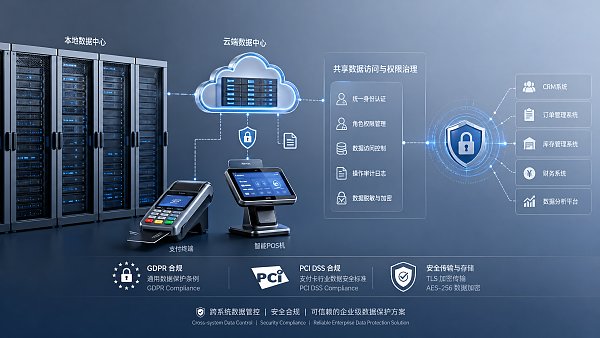
Shared data access sounds efficient because it supports operational speed, unified reporting, and service continuity. In practice, however, the first GDPR weakness often appears when multiple teams use the same data set for different purposes. A cloud administrator may need configuration visibility, a payment operations team may require settlement access, and a kiosk support vendor may only need device diagnostics. If those boundaries are not separated, personal data can be exposed well beyond legitimate use.
This issue is especially visible in environments where cloud ERP, CRM, payment gateways, and smart terminals interact. A single customer profile may pass through 4–7 workflow stages, including order capture, payment authorization, device logging, support tickets, and analytics dashboards. Each handoff introduces risk. GDPR compliance problems begin when enterprises cannot clearly document who accessed what data, for what purpose, and for how long.
Another common trigger is role inflation. Staff who originally needed temporary access during implementation or troubleshooting often retain those privileges for 90 days, 180 days, or longer. In large B2B deployments, that may include external integrators, distributors, field maintenance partners, or regional finance teams. The risk is not always malicious activity. More often, it is routine overexposure caused by weak permission lifecycle management.
Typical access-related GDPR breakdowns
- Shared administrator accounts used across 2 or more systems, making accountability difficult during audits.
- Support teams receiving full customer records when only device ID, error logs, and service location are needed.
- Payment and POS integrations storing duplicate personal data across cloud, terminal, and reporting tools.
- Inactive contractor accounts remaining enabled 30–120 days after a project milestone is completed.
The table below shows how shared access issues appear across common digital service and smart-terminal environments.
The key conclusion is simple: the more systems share data without role discipline, the more difficult it becomes to prove necessity, proportionality, and accountability. For procurement and governance teams, this means access architecture should be evaluated as early as the RFI or vendor shortlist stage, not after deployment.
How Weak Permission Controls Affect PCI-DSS, ISO Readiness, and Commercial Expansion
Shared data access is not only a GDPR issue. In modern service-led industries, access control failures often spread into payment security, certification readiness, and regional expansion planning. If a payment platform allows broad internal visibility into card-adjacent transaction records, the compliance perimeter becomes harder to define. That can increase control validation effort during PCI-DSS reviews and force additional segmentation work.
For organizations preparing for ISO-aligned management system reviews, access governance is equally practical. Audit teams typically need evidence that permissions are assigned, reviewed, changed, and revoked through a controlled process. If the enterprise cannot show review logs every 3, 6, or 12 months, the problem is not abstract. It becomes an operational barrier that slows certification preparation and corrective action closure.
Commercially, the effect can be underestimated. Large buyers in retail, finance, and education increasingly ask suppliers to describe data segregation, subcontractor access, and incident handling before contract approval. A weak answer can reduce bid competitiveness, extend legal review cycles by 2–4 weeks, and trigger more detailed technical due diligence. In market penetration terms, poor access governance becomes a sales friction issue, not just a security issue.
Three business areas where access governance changes outcomes
First, in cross-border payment operations, regional teams often need localized reporting but not full customer-level data. Second, in smart POS and kiosk deployments, field service providers need device health indicators, not unrestricted transaction histories. Third, in SaaS-based education or enterprise systems, implementation consultants may need temporary setup access for 14–30 days, followed by formal removal.
Control areas buyers should verify
- Whether role-based access control is supported at user, team, and regional levels.
- Whether privileged accounts are reviewed on a fixed cycle such as every 90 days.
- Whether third-party remote access is time-limited, logged, and approved per incident.
- Whether data exports, screenshots, and API access are governed separately from login rights.
The matrix below helps stakeholders connect compliance exposure with commercial consequences.
For enterprise buyers, the lesson is that access governance must be treated as a measurable procurement item. It affects the cost of compliance, the pace of deployment, and the credibility of future expansion across regulated markets.
A Practical Access Governance Framework for Cloud, Payments, and Smart Terminals
A workable framework does not begin with excessive complexity. Most organizations can reduce major GDPR exposure by formalizing 5 core layers: data mapping, role definition, least-privilege enforcement, activity logging, and periodic review. These layers must operate across cloud applications, payment systems, POS terminals, kiosks, and external service workflows rather than in isolated departments.
Start with data mapping. Identify where personal data is collected, stored, transmitted, cached, or displayed. In many B2B environments, a single transaction may touch 3–8 repositories, including terminal memory, middleware, cloud dashboards, and support ticketing tools. Without this inventory, teams cannot properly restrict access because they do not know where exposure exists.
Next, define access roles by business necessity. An operator may need transaction status but not customer identity details. A finance approver may need settlement summaries but not device diagnostics. A project manager may need implementation progress dashboards but not live payment records. The strongest models separate at least 4 categories: operational users, administrators, auditors, and third-party service providers.
Recommended implementation sequence
- Map systems, data flows, and external processors within 2–4 weeks.
- Define role catalog and approval owners for each function within 10–15 business days.
- Apply least-privilege controls and remove legacy shared accounts.
- Enable logging, exception alerts, and evidence retention for at least 6–12 months.
- Run access recertification every 90 or 180 days based on system criticality.
What “least privilege” should mean in practice
Least privilege is not just fewer permissions. It means limiting data fields, functions, export rights, support windows, and geographic scope. For example, a kiosk maintenance vendor may only access device serial number, uptime, firmware version, and fault code for a 4-hour support session. That is far more defensible than granting broad dashboard access because it is convenient.
A mature framework also includes rapid deprovisioning. When employees change roles or partners leave a project, privileges should be adjusted within 24 hours, not during the next quarterly review. This is especially important in channel-driven businesses where distributors, agents, and regional service teams may enter and exit operational workflows frequently.
For G-MST-oriented sectors, the most effective governance programs align technical controls with regulatory and commercial documentation. The enterprise should be able to show access matrices, approval trails, processor boundaries, and review records during customer audits, certification preparation, and procurement evaluations without building evidence from scratch each time.
What Procurement, Technical Evaluation, and Finance Teams Should Check Before Approval
Access governance should be embedded into sourcing decisions early. If procurement only reviews price, uptime, and deployment scope, hidden compliance costs can emerge later. These costs may include reconfiguration effort, extra audit support, third-party security reviews, and contract amendments. For finance approvers, that means the cheapest platform at onboarding can become the more expensive option within 6–12 months.
Technical evaluators should verify whether the vendor supports role granularity across headquarters, branch operations, external partners, and temporary staff. In smart terminal ecosystems, this matters because device fleets can scale from 50 units to 5,000 units across several regions. A system that only offers basic administrator and user roles may become unmanageable long before business growth reaches its second phase.
Security and quality teams should also ask whether logs are exportable, how long records are retained, and whether remote access sessions can be time-boxed. In regulated procurement, a practical threshold is whether the vendor can support evidence retention for 180–365 days and deliver access reports without custom engineering each time. If reporting is manual, long-term governance costs rise quickly.
Procurement checklist for vendor comparison
The table below is useful for RFQ, technical review, or multi-vendor selection meetings.
This checklist highlights a broader sourcing principle: access governance should be scored like availability, interoperability, and total cost of ownership. It directly affects project risk, compliance readiness, and the effort required to operate cloud, payment, and terminal ecosystems at scale.
Common buying mistakes
- Assuming single sign-on automatically solves authorization design.
- Ignoring temporary contractor access during implementation projects lasting 8–16 weeks.
- Evaluating terminal hardware without reviewing the remote management access model.
- Accepting generic compliance claims without asking for concrete permission workflows.
Implementation Pitfalls, FAQ, and Next-Step Planning
Even when organizations understand the importance of GDPR compliance, execution can fail because ownership is unclear. IT may manage identity systems, operations may control user requests, legal may review processor terms, and procurement may own supplier onboarding. Without a defined governance owner and a 30-60-90 day rollout plan, improvements stall. A successful program usually assigns one accountable lead and 3–5 supporting functions.
Another pitfall is overengineering. Some enterprises attempt to redesign every workflow before addressing the most exposed areas. A better approach is to prioritize high-risk systems first: payment gateways, POS estates, customer service dashboards, and any kiosk platform handling user identity or usage history. In many cases, the first 20% of governance work removes the most visible audit and privacy risk.
For project managers and business evaluators, implementation should include measurable milestones: role catalog approved, inactive accounts removed, third-party support access segmented, and review cycle scheduled. These milestones give procurement, finance, and leadership teams a clearer basis for approving continued rollout or regional expansion.
FAQ: How should enterprises approach shared data access?
How often should access rights be reviewed?
A practical baseline is every 90 days for privileged roles and every 180 days for standard operational users. High-turnover projects, outsourced support teams, and payment environments may require monthly checks for temporary accounts.
Which systems should be prioritized first?
Begin with systems that combine personal data, payment activity, or third-party support exposure. In most modern enterprises, that means payment platforms, cloud reporting tools, customer service consoles, POS fleets, kiosk management portals, and integration middleware.
Is role-based access enough on its own?
No. Role-based access is a foundation, but it must be backed by approval workflows, time limits, logging, data minimization, and deprovisioning rules. Without these supporting controls, roles become static labels rather than effective governance.
What should decision-makers request from vendors?
Request access matrices, sample audit logs, third-party access controls, retention settings, and incident support procedures. These five items reveal far more about operational maturity than broad compliance statements alone.
Shared data access is where many GDPR compliance problems first become visible, but it is also where enterprises can achieve fast, practical improvement. By aligning cloud systems, payment infrastructure, smart terminals, and supplier workflows under a consistent access governance model, organizations can reduce audit friction, support PCI-DSS and ISO readiness, and strengthen market credibility. If you are evaluating digital service platforms, payment ecosystems, or smart terminal deployments, now is the right time to review access architecture in detail. Contact us to discuss your use case, request a tailored evaluation framework, or explore more solutions for compliant digital transformation.
Tags
Recommended for You
 OpenRouter Removes Three AI Inference Providers Over Prompt Theft RisksOpenRouter removes three AI inference providers over prompt theft risks and changes zero data retention eligibility for 125 endpoints. Explore what buyers need to know.Nov 22, 2026Lina Cloud
 FBI Database Suspected Breached; USDA Payment System Disrupted by CyberattackFBI database breach suspected as a USDA cyberattack disrupts farm payments. Explore the potential business impact and practical steps amid uncertainty.Nov 21, 2026Lina Cloud
 How to choose the right capacity for wholesale commercial planetary mixersPlanetary mixer wholesale commercial buyers: learn how to match capacity to recipes, compare supplier ratings, and choose the right mixer with confidence.Nov 21, 2026Lina Cloud
 European Commission Confirms AI-Enabled Cyberattack Took Applications OfflineEuropean Commission AI-enabled cyberattack took several applications offline. Discover what is known about the disruption, ARTEX and the ongoing investigation.Nov 20, 2026Lina Cloud
 When should OEMs conduct electromagnetic compatibility testing?Electromagnetic compatibility testing: OEM teams can reduce redesign risks by testing prototypes early and assessing release-ready products. Discover when to test.Nov 20, 2026Marcus Trust
 CISA Adds Four Vulnerabilities to Known Exploited Vulnerabilities CatalogCISA adds four vulnerabilities to its Known Exploited Vulnerabilities catalog. Discover what the listings mean for patch priorities and risk management.Nov 19, 2026Lina Cloud
 Can IP65 LED grow lights withstand routine washdowns?Can IP65 LED grow lights handle routine washdowns? Discover what the rating covers and how to clean fixtures safely without risking damage.Nov 19, 2026Marcus Trust
 Equinor Reports Cyberattack on IT Systems; Oil and Gas Production UnaffectedEquinor reports a cyberattack on its IT systems, with oil and gas production unaffected. Explore what the incident means for energy supply.Nov 18, 2026Lina Cloud
 How to assess integration capabilities when choosing AI kiosk suppliersCompare AI kiosk suppliers with a practical integration checklist covering APIs, payments, identity, peripherals, failure recovery, and support.Nov 18, 2026Dr. Hideo Tanaka
 US States and Cities Move to Ban Crypto Kiosks Amid Rising FraudUS crypto kiosk bans are gaining momentum amid rising fraud. Discover what local restrictions could mean for operators, suppliers and deployment plans.Nov 17, 2026Dr. Hideo Tanaka
 How many touch points does a classroom interactive panel need?Interactive panel touch points for classroom use: discover when 10 or 20 points make sense and how to choose a reliable display for student collaboration.Nov 17, 2026Professor Sarah Ed
 How to verify component distributors on a supplier discovery platformSupplier Discovery Platform tips for verifying component distributors: check authorization, traceability and delivery claims before you buy.Nov 16, 2026Lina Cloud
 Vietnam Health Ministry Orders Stronger Protection of HIV Patient InformationVietnam HIV patient privacy is in focus as the Health Ministry orders stronger data protection. Discover what the instruction means for healthcare providers.Nov 15, 2026Lina Cloud
 How long do Android smart terminals receive security updates?Android smart terminals have varying security update lifespans. Learn how to verify vendor commitments, assess remaining support, and plan a secure deployment.Nov 15, 2026Lina Cloud
 Microsoft 365 Consumer Services Restored After Global OutageMicrosoft 365 consumer services are back after a global outage. Discover what caused the disruption and why enterprise services remain under monitoring.Nov 14, 2026Lina Cloud
 How much does aeration add to aquaculture utility costs?Aquaculture utilities cost can rise significantly with aeration. Learn how to calculate energy expenses, compare equipment, and build a reliable budget.Nov 14, 2026Lina Cloud
 Trump AI Task Force Discusses Cyberattack Reporting Standards for Critical InfrastructureAI cyberattack reporting standards are under discussion for critical infrastructure. Explore potential impacts on operators, suppliers and incident response.Nov 13, 2026Lina Cloud
 How to check an EMC laboratory's test frequency rangeVerify an EMC test frequency range laboratory claim with confidence. Learn how to check accredited scope, test methods, facilities, and product requirements before booking.Nov 13, 2026Marcus Trust
 Singapore PDPC and CSA Issue Joint Advisory on Insecure API Data Protection RisksSingapore PDPC and CSA highlight insecure API data protection risks. Discover what developers and API users should know about security and compliance.Nov 12, 2026Lina Cloud
 How to size industrial coffee processing machinery for your production volumeSize industrial coffee processing machinery with confidence. Learn to calculate throughput, account for losses, and compare supplier capacity claims.Nov 12, 2026Lina Cloud
 Singapore CSA Issues Alert on Microsoft's November 2026 Security PatchesSingapore CSA’s November 2026 Microsoft security patch alert highlights potential risks. Explore what businesses should verify and how to plan updates.Nov 11, 2026Lina Cloud
 How many nits does a digital signage window display need?Explore digital signage brightness nits data for your window display, from shaded storefronts to direct sunlight, and choose a screen that stays readable.Nov 11, 2026Digital Signage
 CISA Adds SonicWall SonicOS MFA Bypass Flaw to KEV CatalogCISA adds the SonicWall SonicOS MFA bypass flaw, CVE-2026-19868, to its KEV catalog. Learn why it matters and what affected organizations should do next.Nov 10, 2026Lina Cloud
 Is a 50 kg spiral dough mixer right for your batch size?Is a 50 kg spiral dough mixer right for your bakery? Compare batch capacity, dough requirements and production timing before you buy.Nov 10, 2026Lina Cloud
 New Zealand NCSC Report Warns AI Is Accelerating CybercrimeNew Zealand's NCSC warns that AI is accelerating cybercrime. Discover what the report means for supply chain security and how organizations can respond.Nov 09, 2026Lina Cloud
 How to choose a touchscreen medical kiosk for patient check-inChoose a touchscreen medical kiosk with confidence. Explore accessibility, integration, privacy, cleaning and costs to find the right patient check-in solution.Nov 09, 2026Dr. Hideo Tanaka
 India’s DPDP Act and Rules Set New Compliance Demands for Schools and EdTechIndia’s DPDP Act and 2025 Rules raise data privacy questions for schools and EdTech. Explore consent, data minimization and practical review priorities.Nov 08, 2026Marcus Trust
 How much horsepower do commercial towable stump grinders need?Choosing towable stump grinders for commercial work? Compare horsepower ranges, cutting performance and towing limits to find the right machine for your workload.Nov 08, 2026Lina Cloud
 US Agencies Warn of Attacks Targeting Food and Medical Cold-Chain SystemsCold-chain cybersecurity is under scrutiny as US agencies warn of attacks on food and medical refrigeration controls. Explore the risks and practical steps to protect supplies.Nov 07, 2026Lina Cloud
 How to verify boric acid purity when buying wholesale from a factoryChoosing a wholesale boric acid factory? Learn how to verify purity, check batch COAs and plan independent tests before placing your order.Nov 07, 2026Marcus Trust
 Class A vs. Class B marine AIS transponders: Which do you need?Choose the right AIS transponder system marine applications demand. Compare Class A, Class B CSTDMA and SOTDMA, plus installation and compliance needs.Nov 06, 2026Lina Cloud
 OpenSSH 10.6p2 Fixes CVE-2026-123158 Password Authentication BypassOpenSSH 10.6p2 fixes CVE-2026-123158, a password authentication bypass. Find out which Linux systems are affected and how to secure them.Nov 06, 2026Lina Cloud
 Is a mini rice harvester for small farms worth the cost?Is a mini rice harvester for small farms worth the cost? Compare ownership expenses, payback, field suitability, and rental options before you invest.Nov 05, 2026Lina Cloud
 CISA Adds WordPress Core RCE Vulnerability to KEV CatalogWordPress core RCE vulnerability CVE-2026-119977 joins CISA's KEV catalog. Explore the active exploitation risk and what WordPress operators need to know.Nov 05, 2026Lina Cloud
 How to verify the EGCG content of 98% green tea extractGreen tea extract 98 EGCG: Learn how to verify purity with HPLC testing, assess COAs, compare reporting bases, and make confident quality decisions.Nov 04, 2026Marcus Trust
 European Supermarkets Hit by Second Wave of Smart Freezer CyberattacksEuropean supermarket cyberattacks target smart freezer controls, raising food safety concerns. Discover what happened and how retailers are responding.Nov 04, 2026Lina Cloud
 How do payment app encryption layers protect card data?Discover how payment app encryption layers protect card data in transit and at rest, and learn what to check when evaluating security and PCI DSS compliance.Nov 03, 2026Lina Cloud
 How to verify the purity of wholesale xylitol sweetenerVerify xylitol sweetener wholesale sugar substitute purity with batch-specific COAs, appropriate lab tests, and sampling practices that help reduce supply-chain risk.Nov 02, 2026Marcus Trust
 Thailand to Require Social Media Platforms to Verify Advertisers From November 1Thailand advertiser verification rules take effect November 1, 2026. Discover what social media platforms and businesses need to know before running paid ads.Nov 02, 2026Marcus Trust
 How does plant capacity affect blood meal processing plant cost?Blood meal processing plant cost depends on capacity, supply, and energy use. Compare plant sizes and uncover ways to improve your investment.Nov 01, 2026Lina Cloud