Pharmaceutical Processing Compliance Pitfalls: A Practical Risk Guide for QC and Safety Teams
In pharmaceutical processing, even minor compliance gaps can escalate into batch failures, audit findings, product recalls, or patient safety risks.
For quality control and safety management teams, the challenge is no longer limited to documentation or final product testing.
It now extends to data integrity, validated equipment, contamination control, supplier oversight, operator behavior, and changing global regulatory expectations.
The most important lesson is simple: compliance failures usually begin as routine process weaknesses that remain unnoticed too long.
This article explains the most common pitfalls and how a risk-based approach can strengthen readiness before inspectors identify the gaps.
Why compliance pitfalls still happen in mature pharmaceutical processing

Many pharmaceutical sites already have standard operating procedures, batch records, training systems, and quality management platforms in place.
Yet warning letters and inspection findings continue to show recurring weaknesses in basic GMP execution and process control.
The reason is rarely a complete absence of systems. More often, systems exist but are poorly connected, inconsistently followed, or weakly challenged.
QC and safety teams often work under production pressure, tight release timelines, aging equipment, and fragmented digital records.
In that environment, small deviations may be normalized, temporary fixes may become routine, and documentation may lag behind actual practice.
A strong compliance culture therefore depends on asking whether procedures reflect real operations, not only whether documents exist.
For inspectors, the key question is whether the facility can prove control over critical process parameters and product quality risks.
Pitfall 1: Treating documentation as proof instead of evidence
Documentation remains central to pharmaceutical processing, but completed forms alone do not prove that a process was controlled.
A common pitfall is creating records that satisfy format requirements while failing to capture meaningful process decisions and exceptions.
Examples include missing rationale for parameter changes, unexplained corrections, incomplete cleaning logs, and batch record entries made after operations.
These issues raise doubts about whether activities happened as written, especially when timestamps, signatures, and supporting data do not align.
Quality teams should review documentation for traceability, contemporaneous recording, and connection to actual risk controls.
The best records show what happened, who performed the step, when it occurred, what was observed, and why decisions were made.
Safety managers should also verify that incident reports, near-miss records, and environmental observations feed into quality risk assessments.
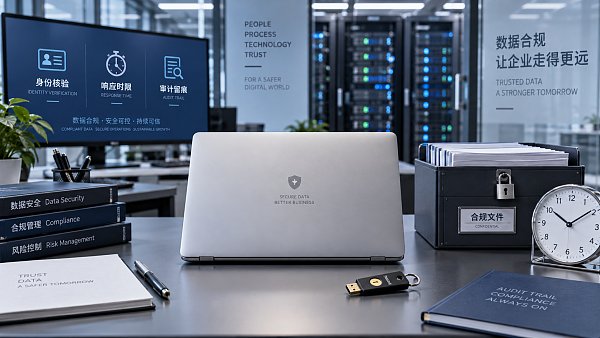
Pitfall 2: Weak data integrity controls in hybrid systems
Data integrity problems are now among the most serious compliance risks in pharmaceutical manufacturing and laboratory operations.
The risk increases when sites use a mix of paper records, spreadsheets, standalone instruments, and partially integrated software platforms.
Manual transcription, shared passwords, uncontrolled spreadsheets, overwritten files, and incomplete audit trail reviews can all undermine trust.
Regulators expect data to be attributable, legible, contemporaneous, original, accurate, complete, consistent, enduring, and available.
QC teams should not rely only on final certificates or printed summaries when original electronic data contains the real compliance evidence.
Audit trails should be reviewed based on risk, especially for chromatographic systems, environmental monitoring tools, weighing systems, and critical alarms.
Organizations should define who reviews audit trails, what events require escalation, and how suspicious changes are investigated.
For G-MST’s digital and smart-terminal audience, this is where compliant system architecture becomes a business-critical control.
Pitfall 3: Equipment qualification that does not match actual use
Equipment qualification is another area where documentation can appear complete while operational risk remains high.
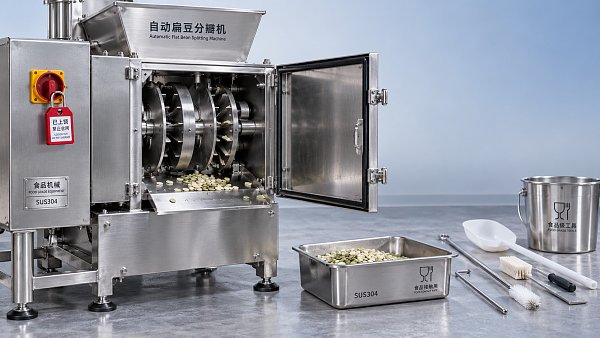
Installation qualification, operational qualification, and performance qualification must reflect how equipment is actually used in pharmaceutical processing.
Problems arise when validation protocols are copied from older systems, vendor templates, or generic assumptions without site-specific risk review.
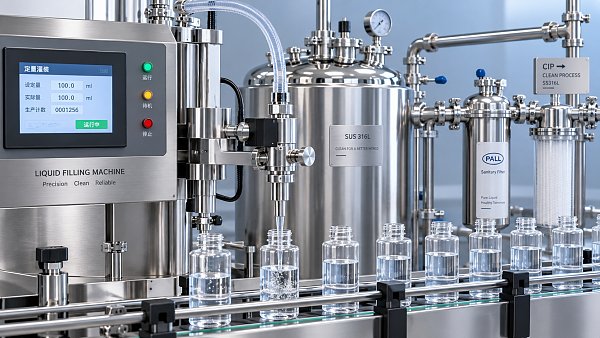
For example, a mixer, filling line, sterilizer, or cleanroom monitoring system may pass tests that do not challenge worst-case conditions.
Changes in product viscosity, batch size, cleaning method, software version, or operating range may invalidate earlier assumptions.
QC and engineering teams should jointly review whether qualified ranges still match current recipes, materials, and production volumes.
Preventive maintenance failures also create compliance exposure when overdue calibrations, ignored alarms, or repeated breakdowns affect critical quality attributes.
A practical control is maintaining a living equipment risk register connected to deviations, maintenance history, and change control records.
Pitfall 4: Contamination control plans that stay too theoretical
Contamination control is not only a sterile manufacturing concern. It applies across solid dose, biologics, liquids, packaging, and multiproduct facilities.
Many sites have contamination control strategies, but the weakness lies in translating them into visible shop-floor behaviors.
Common gaps include poor personnel flow, unclear material segregation, inadequate line clearance, weak gowning discipline, and insufficient cleaning verification.
Environmental monitoring data may also be reviewed as isolated results instead of being trended to detect gradual deterioration.
Safety managers should consider whether cleaning agents, residues, airborne particles, microbial risks, and cross-contact hazards are assessed together.
QC teams should ensure that alert and action limits are scientifically justified, periodically reviewed, and connected to investigation triggers.
Strong contamination control depends on observing real practices during shift changes, maintenance interventions, and high-pressure production periods.
Those moments often reveal whether the written strategy has become a working operational discipline.
Pitfall 5: Deviation investigations that stop at operator error
Deviation management is one of the clearest indicators of a pharmaceutical site’s quality maturity.
A weak investigation often identifies operator error without examining training design, equipment usability, workload, supervision, or process robustness.
This approach may close the deviation quickly, but it rarely prevents recurrence or satisfies experienced inspectors.
Effective investigations use evidence from batch records, equipment logs, interviews, laboratory data, environmental records, and process trends.
Root cause analysis should distinguish between direct cause, contributing factors, and systemic weakness.
Corrective and preventive actions should be specific, measurable, risk-based, and verified for effectiveness after implementation.
QC teams should track recurring deviation themes, not only individual closure dates, because repeat events often reveal deeper process instability.
Safety managers should be included when deviations involve exposure risks, containment failures, chemical handling, or ergonomic hazards.
Pitfall 6: Change control that underestimates cumulative impact
Change control failures frequently occur because each change appears minor when reviewed in isolation.
Over time, multiple small adjustments can alter validated status, contamination risk, cleaning effectiveness, or data reliability.
Examples include changing suppliers, updating software, replacing spare parts, modifying cleaning cycles, or adjusting production sequence.
Each decision may seem reasonable, but the combined effect can move the process beyond its validated knowledge base.
A strong change control program evaluates direct impact, indirect impact, regulatory impact, validation impact, and patient risk.
Cross-functional review is essential because production, QC, engineering, safety, procurement, and IT may each see different consequences.
For digital systems, change control must also address user access, cybersecurity, audit trails, backup procedures, and interface integrity.
The goal is not to block change, but to make change traceable, justified, tested, and controlled.
Pitfall 7: Supplier oversight limited to certificates and price
Supplier quality has become more complex as pharmaceutical supply chains depend on global materials, outsourced services, and specialized technologies.
Relying only on certificates of analysis, historical trust, or purchasing convenience creates significant compliance risk.
Raw materials, excipients, packaging components, cleaning chemicals, laboratory services, calibration providers, and software vendors can all affect quality.
Supplier qualification should consider criticality, regulatory history, audit findings, change notification practices, and ability to maintain consistent specifications.
QC teams should compare incoming results against historical trends, not only against broad acceptance limits.
Procurement teams should be trained to recognize that lower cost may increase testing burden, investigation frequency, or recall exposure.
Technical agreements must clearly define responsibilities for deviations, complaints, change notifications, data access, and documentation retention.
In modern pharmaceutical processing, supplier oversight is a continuous risk program, not a one-time approval exercise.
Pitfall 8: Training systems that measure attendance instead of competence
Training records are easy to produce, but competence is harder to prove during an inspection or incident review.
A frequent pitfall is assuming that reading an SOP automatically qualifies personnel to perform a critical task.
High-risk activities need practical demonstration, supervised execution, periodic reassessment, and retraining after deviations or procedural changes.
Examples include aseptic behavior, line clearance, sampling technique, cleaning verification, equipment setup, emergency response, and data entry practices.
Training effectiveness should be evaluated using observation, questioning, error trends, and performance during actual operations.
Safety managers should integrate occupational safety learning with GMP expectations, especially where chemical exposure or containment failures may affect product quality.
Supervisors play a critical role because they reinforce habits during routine work, not only during formal classroom sessions.
A mature training program makes correct behavior easier, visible, and consistently supported by workplace design.
How QC and safety teams can build a stronger risk-based compliance model
The best response to these pitfalls is not adding more paperwork. It is building a risk-based operating model.
Start by identifying critical process parameters, critical quality attributes, critical equipment, critical materials, and critical data sources.
Then map where failures could occur, how they would be detected, and what controls currently prevent patient impact.
This approach helps teams prioritize limited resources toward the controls that matter most for product safety and regulatory confidence.
Routine review meetings should combine quality metrics, safety signals, maintenance data, environmental trends, deviations, complaints, and supplier performance.
When these signals are reviewed separately, organizations miss connections that could reveal emerging compliance risk.
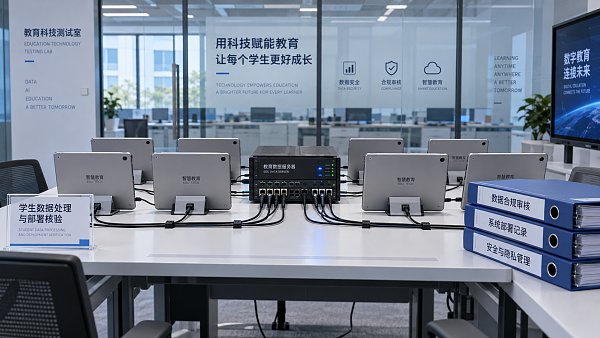
Digital tools can improve visibility, but only when configured around validated workflows, controlled access, reliable master data, and accountable review.
Smart terminals, cloud platforms, and automated monitoring systems should support GMP decisions, not create new blind spots.
What inspectors and internal auditors usually look for
Auditors rarely evaluate compliance by reading procedures alone. They compare documents, records, systems, interviews, and real shop-floor behavior.
They may ask operators to explain steps, review alarm histories, trace a batch deviation, or verify cleaning and maintenance records.
They often look for consistency between SOPs, validation protocols, training records, batch files, laboratory data, and actual practices.
Inconsistency does not always mean fraud, but it suggests weak control and may trigger deeper investigation.
Internal audits should therefore be designed to challenge assumptions, not simply confirm that required documents are filed.
A useful audit follows the product journey from material receipt through processing, testing, release, storage, and complaint handling.
This process-based view helps QC and safety teams identify handoff failures between departments.
It also supports management decisions about investment, staffing, automation, equipment replacement, and supplier remediation.
Practical warning signs that compliance risk is increasing
Several early warning signs suggest that pharmaceutical processing compliance may be weakening before a major finding occurs.
These include rising deviations, repeated CAPA extensions, frequent manual overrides, unexplained yield variation, and increasing environmental excursions.
Other signals include overdue maintenance, recurring training gaps, delayed batch record review, spreadsheet proliferation, and supplier notification failures.
Management should also pay attention when employees hesitate to report issues because production targets feel more important than quality signals.
A healthy compliance culture encourages timely escalation, transparent investigation, and learning from weak signals.
QC and safety leaders should convert these warning signs into dashboards that support routine decision-making.
The dashboard should not become a decorative metric report. It must trigger ownership, deadlines, and management review when thresholds are exceeded.
This is where compliance becomes an operating discipline rather than an inspection-season activity.
Conclusion: compliance strength comes from controlled execution
Pharmaceutical processing compliance pitfalls usually emerge where procedures, systems, people, equipment, and data stop reinforcing one another.
For QC and safety management teams, the priority is to verify real control over critical risks, not merely maintain formal documentation.
The most resilient organizations treat deviations, audit findings, supplier signals, and safety events as connected sources of operational intelligence.
They also invest in validated digital systems, competent personnel, disciplined change control, and contamination strategies that work on the floor.
Ultimately, compliance is not a department or a checklist. It is the daily ability to prove that every batch remains under control.
When pharmaceutical companies adopt that mindset, they reduce regulatory exposure while protecting patients, brands, and long-term operational trust.