[FIN]CROSS-BORDERVOL: $4.2T
[SEC]CYBER ALERT: TIER2
[POL]IS0 GROWTH:+14%
[GEO] CLOUDINDEX: +2.4%
Structural Logic
Category Filters
FDA Tightens Import Rules for AI-Enabled Terminals
Lead Author
Published
Views:
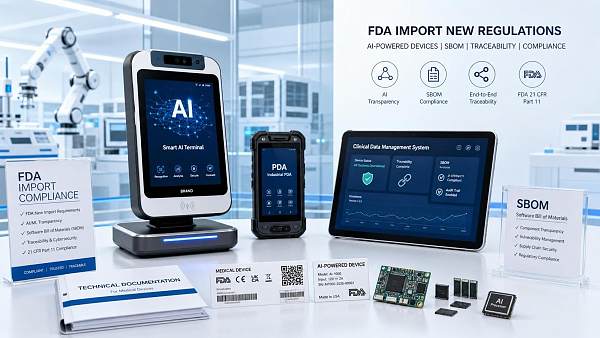
On July 17, 2026, the U.S. Food and Drug Administration updated its guidance for digital health software used in medical devices, setting a near-term compliance change for imported smart terminals with embedded AI functions. From August 1, 2026, affected products must be accompanied by a standardized software bill of materials (SBOM) and documentation covering AI training data sources, version control, and traceability of decision logic. For exporters, device manufacturers, component integrators, procurement teams, and compliance functions, this is not just a documentation update; it directly affects market access to the United States and raises the practical bar for software and AI traceability in delivery workflows.
What the revised FDA guidance now requires
The confirmed facts are limited but clear. The FDA issued a revised guidance document titled Digital Health Software for Medical Devices: SBOM and AI Traceability Requirements on July 17, 2026. The guidance states that, starting on August 1, 2026, all imported smart terminals with embedded AI functions must be accompanied by a standardized SBOM and a traceability statement covering AI model training data sources, version control, and decision logic.
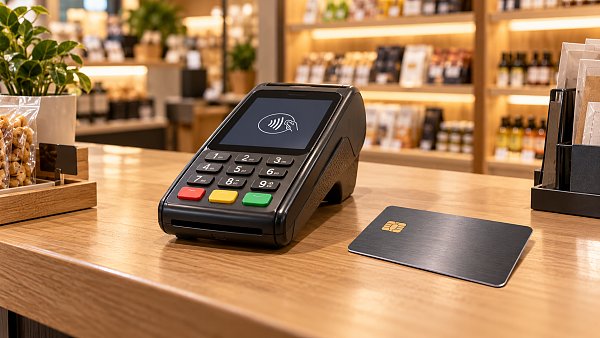
The product scope identified in the provided information includes POS hardware, self-service terminals, industrial PDAs, and interactive tablets, where these products contain embedded AI functionality. The requirement is described as directly linked to ISO/IEC 23894 for AI governance and to the FDA pre-certification pathway. The information provided also states that the change affects access for global suppliers seeking entry to the U.S. market.
Where the pressure is likely to appear across the supply chain
Export-facing manufacturers may face a higher documentation threshold
Analysis shows that manufacturers shipping AI-enabled terminals to the United States are the first group likely to feel the operational effect. The reason is straightforward: the new requirement is tied to import eligibility, and the required materials are not limited to hardware specifications. The pressure point is likely to sit in technical files, shipment documentation, and internal coordination between software, firmware, AI, and regulatory teams. What deserves closer attention is whether existing export packages already contain documentation that can be mapped to SBOM format and AI traceability expectations.
Integrators and OEM supply partners may need deeper upstream visibility
From an industry perspective, companies that assemble finished terminals from third-party software components, embedded modules, or externally developed AI capabilities may face a more complex compliance burden. They may not only need their own records, but also structured input from suppliers on software composition, model versions, and traceability statements. In practice, the impact may appear in supplier qualification, component sourcing, document collection, and handoff procedures before shipment.
Procurement and buyer-side teams may tighten acceptance conditions
Observably, procurement departments and buyers sourcing terminals for U.S.-bound projects may need to pay closer attention to whether vendors can provide compliant SBOM files and AI traceability materials within delivery timelines. The likely effect is not limited to import clearance concerns; it may also extend to tender documentation, technical specification alignment, and supplier selection criteria. For buyers, this could shift evaluation from product functionality alone to readiness of compliance documentation.
Compliance, testing, and post-delivery functions may see added review work
Analysis shows that the rule change may also affect internal compliance reviewers, certification-related service providers, and after-sales quality teams. Even where the input does not specify an expanded testing procedure, the requirement for documented software composition and AI traceability implies closer review of version histories, decision logic records, and change management evidence. Companies involved in support and maintenance may therefore need stronger traceability between shipped configurations and later updates.
Practical points companies should monitor now
Check whether product documentation can support import use from August 1
From a practical standpoint, companies should first determine whether any exported smart terminal with embedded AI falls within the categories named in the guidance. The immediate question is whether current product files already support a standardized SBOM and a traceability statement for AI training data sources, version control, and decision logic. If not, the compliance gap is likely to appear before shipment rather than after market entry.
Review supplier document flow, not only product performance
Analysis shows that documentation readiness may become as important as hardware and software performance for affected shipments. Companies relying on external software stacks, AI modules, or contract manufacturing should pay attention to how upstream records are collected, updated, and validated. What deserves closer attention is whether supplier contracts, purchasing terms, or technical handoff requirements need to reflect the new documentation burden.
Watch for changes in certification and regulatory wording
The input links this requirement to ISO/IEC 23894 and the FDA pre-certification pathway, which suggests that companies should closely watch how this linkage is interpreted in later compliance reviews or related documentation requests. However, the provided information does not define detailed enforcement mechanics. It is therefore more appropriate to understand this as a concrete compliance signal with execution details still requiring verification.
Prepare for possible effects on lead times and delivery commitments
Observably, even without confirmed evidence of shipment delays, companies should pay attention to whether additional SBOM and AI traceability materials affect preparation time for export orders. The practical risk may sit in document completeness, internal review cycles, and consistency between product versions and filing materials. This is especially relevant where delivery schedules are tight or procurement commitments have already been set.
Why this reads as an execution signal rather than a distant policy discussion
Analysis shows that this update is better understood as an operational rule change than as a general policy direction. The reason is the short implementation window and the explicit attachment of documentation requirements to imported AI-enabled smart terminals. At the same time, it would be premature to describe the full market effect as settled, because the provided information does not include detailed review practice, filing format interpretation, or industry feedback. For that reason, the market should read this as a rule with immediate practical implications, while continuing to monitor how implementation language is applied in real transactions and compliance reviews.
How the market should frame this development
At this stage, the most balanced reading is that the FDA has raised the documentary threshold for U.S.-bound AI-enabled smart terminals by tying market access more directly to software transparency and AI traceability. The significance lies less in headline policy language and more in what companies may need to produce before products move. It is more appropriate to understand this development as a live compliance requirement with clear directional impact, but with some execution details still requiring close observation.
Basis of this article and what still needs verification
This article is based on the user-provided news title, event date, and event summary. For developments of this type, relevant source categories commonly include official regulatory announcements, releases from supervisory agencies, customs or trade authority notices, industry association updates, standards organization documents, and reporting by authoritative trade media. No specific official source link was provided in the input, so the original link and any subsequent interpretive materials still need to be verified on an ongoing basis. Continued attention is warranted on detailed implementation language, certification-related interpretation, tender document changes, industry feedback, and how companies execute the requirement in practice.
Tags
Recommended for You
 How to size industrial coffee processing machinery for your production volumeSize industrial coffee processing machinery with confidence. Learn to calculate throughput, account for losses, and compare supplier capacity claims.Nov 12, 2026Lina Cloud
 Singapore CSA Issues Alert on Microsoft's November 2026 Security PatchesSingapore CSA’s November 2026 Microsoft security patch alert highlights potential risks. Explore what businesses should verify and how to plan updates.Nov 11, 2026Lina Cloud
 How many nits does a digital signage window display need?Explore digital signage brightness nits data for your window display, from shaded storefronts to direct sunlight, and choose a screen that stays readable.Nov 11, 2026Digital Signage
 CISA Adds SonicWall SonicOS MFA Bypass Flaw to KEV CatalogCISA adds the SonicWall SonicOS MFA bypass flaw, CVE-2026-19868, to its KEV catalog. Learn why it matters and what affected organizations should do next.Nov 10, 2026Lina Cloud
 Is a 50 kg spiral dough mixer right for your batch size?Is a 50 kg spiral dough mixer right for your bakery? Compare batch capacity, dough requirements and production timing before you buy.Nov 10, 2026Lina Cloud
 New Zealand NCSC Report Warns AI Is Accelerating CybercrimeNew Zealand's NCSC warns that AI is accelerating cybercrime. Discover what the report means for supply chain security and how organizations can respond.Nov 09, 2026Lina Cloud
 How to choose a touchscreen medical kiosk for patient check-inChoose a touchscreen medical kiosk with confidence. Explore accessibility, integration, privacy, cleaning and costs to find the right patient check-in solution.Nov 09, 2026Dr. Hideo Tanaka
 India’s DPDP Act and Rules Set New Compliance Demands for Schools and EdTechIndia’s DPDP Act and 2025 Rules raise data privacy questions for schools and EdTech. Explore consent, data minimization and practical review priorities.Nov 08, 2026Marcus Trust
 How much horsepower do commercial towable stump grinders need?Choosing towable stump grinders for commercial work? Compare horsepower ranges, cutting performance and towing limits to find the right machine for your workload.Nov 08, 2026Lina Cloud
 US Agencies Warn of Attacks Targeting Food and Medical Cold-Chain SystemsCold-chain cybersecurity is under scrutiny as US agencies warn of attacks on food and medical refrigeration controls. Explore the risks and practical steps to protect supplies.Nov 07, 2026Lina Cloud
 How to verify boric acid purity when buying wholesale from a factoryChoosing a wholesale boric acid factory? Learn how to verify purity, check batch COAs and plan independent tests before placing your order.Nov 07, 2026Marcus Trust
 Class A vs. Class B marine AIS transponders: Which do you need?Choose the right AIS transponder system marine applications demand. Compare Class A, Class B CSTDMA and SOTDMA, plus installation and compliance needs.Nov 06, 2026Lina Cloud
 OpenSSH 10.6p2 Fixes CVE-2026-123158 Password Authentication BypassOpenSSH 10.6p2 fixes CVE-2026-123158, a password authentication bypass. Find out which Linux systems are affected and how to secure them.Nov 06, 2026Lina Cloud
 Is a mini rice harvester for small farms worth the cost?Is a mini rice harvester for small farms worth the cost? Compare ownership expenses, payback, field suitability, and rental options before you invest.Nov 05, 2026Lina Cloud
 CISA Adds WordPress Core RCE Vulnerability to KEV CatalogWordPress core RCE vulnerability CVE-2026-119977 joins CISA's KEV catalog. Explore the active exploitation risk and what WordPress operators need to know.Nov 05, 2026Lina Cloud
 How to verify the EGCG content of 98% green tea extractGreen tea extract 98 EGCG: Learn how to verify purity with HPLC testing, assess COAs, compare reporting bases, and make confident quality decisions.Nov 04, 2026Marcus Trust
 European Supermarkets Hit by Second Wave of Smart Freezer CyberattacksEuropean supermarket cyberattacks target smart freezer controls, raising food safety concerns. Discover what happened and how retailers are responding.Nov 04, 2026Lina Cloud
 How do payment app encryption layers protect card data?Discover how payment app encryption layers protect card data in transit and at rest, and learn what to check when evaluating security and PCI DSS compliance.Nov 03, 2026Lina Cloud
 How to verify the purity of wholesale xylitol sweetenerVerify xylitol sweetener wholesale sugar substitute purity with batch-specific COAs, appropriate lab tests, and sampling practices that help reduce supply-chain risk.Nov 02, 2026Marcus Trust
 Thailand to Require Social Media Platforms to Verify Advertisers From November 1Thailand advertiser verification rules take effect November 1, 2026. Discover what social media platforms and businesses need to know before running paid ads.Nov 02, 2026Marcus Trust
 How does plant capacity affect blood meal processing plant cost?Blood meal processing plant cost depends on capacity, supply, and energy use. Compare plant sizes and uncover ways to improve your investment.Nov 01, 2026Lina Cloud
 Dutch NCSC Warns PHP Vulnerability Exploitation Could WorsenDutch NCSC warns that PHP vulnerability exploitation could worsen. Learn how to assess exposure, verify updates and protect web and CMS services.Nov 01, 2026Lina Cloud
 When is a stainless steel axial flow pump suitable for seawater?Discover when a stainless steel axial flow pump is suitable for seawater, from alloy selection and corrosion risks to hydraulic performance and maintenance.Oct 31, 2026Lina Cloud
 Plaid Executive: AI Agents Will Reshape Payments in Agentic CommerceAI agents could reshape payments in agentic commerce. Explore Plaid's perspective and what autonomous payment choices may mean for businesses.Oct 31, 2026Dr. Marcus Fin
 How to find industrial control manuals in a B2B technical repositoryB2B Technical Repository industrial controls searches made easier: find the right manuals, verify revisions and help reduce maintenance downtime.Oct 30, 2026Lina Cloud
 Mastercard Third-Quarter Profit Rises 18% as Consumer Spending Holds SteadyMastercard's third-quarter profit rose 18% as consumer spending held steady. Explore the revenue gains and what they mean for the payments industry.Oct 30, 2026Dr. Marcus Fin
 How to verify a commercial marine life jacket manufacturer’s SOLAS claimsVet a commercial marine life jackets manufacturer with practical SOLAS checks. Learn to verify certificates, model scope, and vessel acceptance to reduce risks before you buy.Oct 29, 2026Marcus Trust
 Node2Shell Exploitation Threatens Node.js Ecosystem SecurityNode2Shell reportedly exposes Node.js apps to remote code execution. Explore the reported threat, patch verification steps and supplier checks to help protect your enterprise.Oct 29, 2026Lina Cloud
 How concentration affects industrial-grade hydrochloric acid pricesCompare industrial grade hydrochloric acid price by concentration, freight, and handling costs. Discover how to assess true HCl value and choose the most cost-effective supply.Oct 28, 2026Lina Cloud
 Apple Pay and Google Pay Officially Launch in UzbekistanApple Pay and Google Pay launch in Uzbekistan, expanding mobile payment options. Discover what the rollout means for bank customers, merchant acceptance and business readiness.Oct 28, 2026Dr. Marcus Fin
 How to verify lead test results from a wholesale zinc oxide supplierVerify lead results from a wholesale zinc oxide supplier with practical checks for COA traceability, lab methods, and reporting limits. Learn how to make confident lot-release decisions.Oct 27, 2026Marcus Trust
 Check Point Launches Firewall Subscription to Broaden Access to AI-Era SecurityExplore Check Point Firewall-as-a-Subscription for AI-era security. See how monthly or annual plans aim to broaden access for smaller businesses—and what to check before buying.Oct 27, 2026Lina Cloud
 How to evaluate medical kiosk touch responsiveness with glovesEvaluate medical kiosk touch responsiveness with gloves. Learn how to test accuracy, latency, and false touches to compare suppliers and choose a reliable kiosk.Oct 26, 2026Dr. Hideo Tanaka
 DigitalXForce Continues Global X-ROC Rollout for AI-Driven Risk OperationsDigitalXForce’s X-ROC global rollout targets AI-driven risk operations. Explore its approach to continuous control assurance, cyber risk quantification and smarter GRC.Oct 26, 2026Lina Cloud
 How to verify an industrial touch panel supplier is a manufacturerIndustrial Supplier Discovery touch panels guide: Verify factory operations, audit production, and check quality records to find a reliable manufacturer and reduce sourcing risks.Oct 25, 2026Lina Cloud
 OCC Issues Final GENIUS Act Rule Setting Payment Stablecoin FrameworkExplore the OCC’s final GENIUS Act rule for payment stablecoins, including issuer yield restrictions, key compliance questions and what businesses should review before January 2027.Oct 25, 2026Dr. Marcus Fin
 How to choose comparable companies for peer analysis in Latin AmericaPeer Analysis Latin America: Learn how to select comparable companies, assess country risk, and normalize financials to build a defensible peer group and make smarter valuation decisions.Oct 24, 2026Lina Cloud
 Queue Unveils Robotic Pharmacy Kiosk With Capacity for 340 MedicationsQueue’s robotic pharmacy kiosk holds up to 340 medications and offers a 30-second workflow with pill verification. Explore its potential benefits and key procurement considerations.Oct 24, 2026Dr. Hideo Tanaka
 How freight costs affect the delivered bulk ammonium sulfate priceCompare the bulk ammonium sulfate price beyond the plant gate. Discover how freight, handling, and delivery terms affect your total cost—and make smarter buying decisions.Oct 23, 2026Lina Cloud
 Millions of Attempts to Exploit Critical PHP Flaws Force Some Websites OfflineCritical PHP flaws reportedly triggered millions of exploit attempts and website outages. Explore patching priorities, supplier checks and continuity steps to protect online services.Oct 23, 2026Lina Cloud