GDPR Compliance Audit Checklist for 2026 Readiness
As AI-driven services, smart terminals, and cross-border data flows become core to enterprise operations, GDPR readiness can no longer be treated as a once-a-year legal exercise.
A practical GDPR Compliance audit checklist helps decision-makers identify regulatory gaps, validate vendor accountability, strengthen data governance, and prepare for evolving enforcement expectations in 2026.
For organizations operating across SaaS, FinTech, smart retail, EdTech, and TIC ecosystems, this audit framework provides a structured starting point for reducing risk while supporting trustworthy digital transformation.
Why 2026 GDPR readiness is a board-level business issue

Enterprise leaders searching for a GDPR Compliance audit checklist usually need more than a legal template. They need confidence that digital operations can withstand scrutiny.
The main question is not whether policies exist. The real question is whether data practices, vendors, systems, and evidence match those policies every day.
In 2026, GDPR exposure will increasingly intersect with AI governance, payment infrastructure, smart terminals, education platforms, and global service delivery models.
For decision-makers, the audit should clarify operational risk, investment priorities, vendor accountability, and whether growth plans depend on fragile data controls.
A useful checklist therefore connects legal requirements with business execution. It should help leaders decide what to fix first, not merely confirm documentation.
Start with audit scope: where personal data actually moves
The first audit step is defining where personal data is collected, processed, stored, transferred, displayed, or inferred across the enterprise ecosystem.
This includes customer platforms, employee systems, payment flows, cloud environments, mobile applications, help desks, analytics tools, terminals, and third-party service layers.
Many organizations underestimate smart endpoints. POS devices, kiosks, classroom displays, biometric access tools, and testing systems can all process regulated personal data.
Executives should ask whether the audit covers only headquarters systems or the real operating environment across markets, subsidiaries, vendors, and integrations.
A strong 2026 audit scope should include business units, processing purposes, data categories, data subjects, technology owners, processors, locations, and retention periods.
- Confirm every major product, service, and internal function handling personal data is included.
- Map cross-border transfers involving cloud providers, payment processors, support centers, and analytics platforms.
- Identify high-risk processing involving children, biometrics, financial data, location data, profiling, or AI-assisted decisions.
- Review whether smart terminals and connected devices transmit data to centralized platforms or external service providers.
Verify lawful basis, consent, and transparency controls
GDPR compliance begins with proving why each processing activity is lawful. This is where many organizations expose weak internal reasoning.
An audit should test whether lawful bases are documented, appropriate, consistent with user notices, and understood by the teams using the data.
Consent deserves particular scrutiny when services involve marketing, cookies, behavioral analytics, EdTech users, health-adjacent data, or optional personalization features.
Consent should be freely given, specific, informed, unambiguous, and easy to withdraw. Pre-ticked boxes or bundled consent remain high-risk practices.
For legitimate interests, decision-makers should expect a documented balancing test. The company must show necessity, proportionality, and limited impact on individuals.
- Check whether privacy notices match actual processing activities and third-party sharing.
- Review consent records, withdrawal mechanisms, cookie banners, and preference management tools.
- Confirm marketing, analytics, and profiling activities have appropriate lawful bases.
- Ensure product teams cannot introduce new data uses without privacy review.
Assess data governance, ownership, and accountability evidence
Accountability is not a slogan under GDPR. Organizations must demonstrate that privacy responsibilities are assigned, monitored, and supported with reliable evidence.
Executives should confirm whether data protection roles are clear across legal, security, product, procurement, IT, compliance, and business leadership functions.
The audit should review whether a Data Protection Officer is required, properly appointed, independent, and involved early in strategic decisions.
Governance also requires practical escalation channels. Employees need a way to raise privacy concerns before products, integrations, or campaigns go live.
Evidence matters. Regulators and enterprise customers increasingly expect audit trails, approved policies, risk logs, training records, vendor reviews, and remediation tracking.
- Confirm ownership for each processing activity and system.
- Review records of processing activities and update frequency.
- Check board or executive reporting on data protection risk.
- Validate privacy training for engineering, sales, support, procurement, and operations teams.
Review data minimization, retention, and deletion discipline
One of the most practical risk indicators is whether the enterprise keeps more personal data than it can justify or secure.
Data minimization should be visible in product design, onboarding forms, transaction records, support tickets, analytics events, and smart terminal configurations.
Retention schedules must be more than spreadsheet intentions. They need technical enforcement, business owner approval, exception handling, and periodic verification.
For FinTech, SaaS, EdTech, and testing services, retention often intersects with fraud monitoring, legal obligations, certification records, and customer service needs.
The audit should distinguish between useful data, legally required data, and accumulated data that creates avoidable cost, breach exposure, and compliance risk.
- Check whether each data category has a defined retention period and business justification.
- Verify deletion or anonymization processes across production, backups, logs, archives, and analytics systems.
- Review whether inactive accounts, expired contracts, and obsolete device records are removed appropriately.
- Confirm that vendors follow the same retention and deletion requirements contractually and technically.
Audit security measures against real operational threats
GDPR requires appropriate technical and organizational security. For leaders, the important word is appropriate, because controls must match actual risk.
A 2026 audit should examine encryption, access management, logging, vulnerability management, incident response, secure development, endpoint protection, and cloud configuration.
Smart terminals add another layer. Devices may operate in public spaces, remote campuses, retail counters, transport hubs, or partner-controlled environments.
Security review should cover device hardening, firmware updates, tamper resistance, remote management, payment data separation, and secure decommissioning procedures.
The audit should not rely only on policy statements. It should test whether controls work through evidence, samples, configurations, and recent incident records.
- Review role-based access, privileged accounts, multi-factor authentication, and periodic access recertification.
- Check encryption for data in transit, at rest, and on portable or terminal devices.
- Assess patching timelines for cloud systems, endpoints, applications, and embedded devices.
- Validate breach detection, escalation, forensic readiness, and 72-hour notification procedures.
Test vendor, processor, and supply-chain accountability
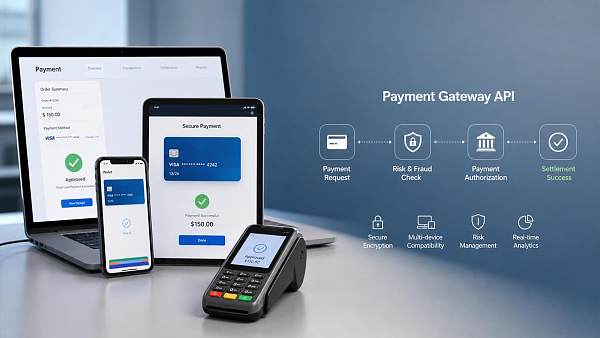
Modern enterprises rarely process data alone. Cloud providers, payment gateways, AI vendors, customer support platforms, and device manufacturers shape GDPR risk.
A strong GDPR Compliance audit checklist must therefore evaluate processors and subprocessors, not only internal policies and enterprise systems.
Decision-makers should ask whether vendor due diligence happens before contracting, during onboarding, and throughout the relationship as services evolve.
Contracts should include GDPR-required processor terms, security commitments, audit rights, breach notification duties, transfer safeguards, assistance obligations, and deletion provisions.
For procurement teams, the commercial question is simple. Can the vendor prove compliance at the level required by your customers and regulators?
- Maintain an approved list of processors and subprocessors handling personal data.
- Review data processing agreements for Article 28 requirements and practical enforceability.
- Check vendor certifications, penetration tests, SOC reports, ISO evidence, and remediation status.
- Confirm exit plans, data return, deletion evidence, and continuity arrangements for critical providers.
Examine cross-border transfers and localization dependencies
Cross-border data movement remains one of the most sensitive GDPR audit areas, especially for global service companies and multinational infrastructure buyers.
The audit should identify transfers outside the European Economic Area, including remote access by support teams and storage in global cloud regions.
Standard Contractual Clauses may be necessary, but they are not always sufficient without transfer risk assessment and supplementary security controls.
Executives should understand whether international growth depends on transfer mechanisms that require updating, additional safeguards, or alternative architecture decisions.
This is particularly important for financial services, education platforms, certification providers, and smart terminal networks operating across regulated jurisdictions.
- Map international transfers by system, vendor, country, purpose, and data category.
- Review transfer impact assessments and supplementary safeguards where required.
- Confirm contractual mechanisms remain current and aligned with operational reality.
- Evaluate whether regional hosting, pseudonymization, or access controls would reduce strategic risk.
Evaluate data subject rights and customer trust operations
Data subject rights are where privacy promises become visible to customers, employees, students, merchants, and citizens using connected services.
The audit should test how the organization handles access, rectification, erasure, restriction, portability, objection, and automated decision-related requests.
Speed matters, but accuracy matters more. Poor identity verification or incomplete system searches can create operational, legal, and reputational damage.
For complex B2B platforms, requests may require coordination between controllers, processors, resellers, schools, merchants, banks, or public-sector clients.
Leaders should ask whether rights management is scalable, measurable, and supported by trained teams rather than improvised case-by-case responses.
- Review intake channels, authentication steps, response templates, and deadline tracking.
- Test whether data can be located across core systems, logs, archives, and vendors.
- Confirm processes for requests involving children, employees, fraud records, or legal exemptions.
- Monitor request volumes, response times, disputes, and recurring process weaknesses.
Include AI, automated decisions, and high-risk processing
By 2026, many GDPR audits will need to examine AI-enabled processing more deeply than earlier privacy reviews usually did.
AI can influence credit decisions, fraud scoring, educational personalization, workforce analytics, customer segmentation, compliance testing, and service automation.
The audit should determine whether personal data is used for model training, inference, profiling, decision support, or fully automated outcomes.
Where processing creates high risk, organizations may need data protection impact assessments, human review, explainability measures, and stricter access controls.
Business leaders should not wait until regulators ask questions. AI governance should be integrated into privacy, security, procurement, and product approval workflows.
- Identify AI systems processing personal data or generating individual-level predictions.
- Review DPIAs for high-risk profiling, monitoring, biometric use, or automated decision-making.
- Check whether individuals receive meaningful information about relevant automated processing.
- Assess vendor claims about model training, data reuse, retention, and human oversight.
Turn the checklist into an executive readiness score
A checklist creates value only when findings become decisions. Executives need a clear view of severity, cost, ownership, and remediation timing.
Each audit item should be scored by regulatory risk, business impact, likelihood, customer exposure, remediation effort, and dependency on external parties.
This approach prevents teams from treating every gap equally. It highlights the controls that protect revenue, contracts, market access, and resilience.
A useful readiness report should separate urgent compliance issues from strategic modernization opportunities, such as better data architecture or vendor consolidation.
For enterprise buyers, audit outputs can also support procurement confidence, customer assurance, cyber insurance discussions, and board-level risk governance.
- Classify findings as critical, high, medium, or low based on practical risk.
- Assign business owners, deadlines, budgets, and evidence requirements for remediation.
- Track unresolved risks accepted by leadership with documented rationale.
- Re-test completed actions to confirm controls are operating effectively.
A practical 2026 GDPR Compliance audit checklist
The following condensed checklist can guide executive conversations before a deeper legal, technical, or third-party assessment begins.
- Confirm audit scope covers all business units, systems, regions, products, and smart endpoints handling personal data.
- Maintain accurate records of processing activities, including purposes, data categories, recipients, retention, and transfer locations.
- Validate lawful basis for each processing activity and ensure notices reflect actual data use.
- Review consent collection, withdrawal, cookie controls, and marketing preferences.
- Confirm governance roles, DPO involvement, executive oversight, training, and escalation processes.
- Check data minimization, retention schedules, deletion workflows, and anonymization practices.
- Assess security controls, access management, encryption, monitoring, vulnerability management, and incident response readiness.
- Review vendor due diligence, processor agreements, subprocessor transparency, and exit procedures.
- Map cross-border transfers and validate transfer mechanisms, assessments, and supplementary safeguards.
- Test data subject rights processes, identity verification, deadlines, system searches, and vendor coordination.
- Evaluate AI, profiling, automated decisions, DPIAs, human oversight, and transparency obligations.
- Document findings, prioritize remediation, assign accountability, and retain evidence for customer or regulator review.
How often should enterprises run the audit?
Annual audits remain useful, but they are no longer enough for enterprises with fast product cycles, acquisitions, or complex vendor ecosystems.
Privacy review should also occur before launching new products, adopting AI tools, changing processors, entering new markets, or deploying smart terminals.
High-risk processing should receive more frequent review, especially when it involves children, financial behavior, biometric identifiers, location data, or automated scoring.
For mature organizations, GDPR readiness becomes a continuous control system rather than a single project led by legal once per year.
Conclusion: GDPR readiness is a competitive operating standard
A 2026 GDPR Compliance audit checklist should help enterprises see whether data protection is embedded in operations, technology, procurement, and leadership decisions.
The strongest organizations will not treat GDPR as paperwork. They will use it to improve trust, reduce breach exposure, and strengthen digital service quality.
For decision-makers across SaaS, FinTech, smart terminals, EdTech, and TIC services, the priority is clear: verify reality, close gaps, and keep evidence ready.
When privacy controls support business strategy, GDPR readiness becomes more than compliance. It becomes a foundation for credible, scalable, and trusted transformation.