[FIN]CROSS-BORDERVOL: $4.2T
[SEC]CYBER ALERT: TIER2
[POL]IS0 GROWTH:+14%
[GEO] CLOUDINDEX: +2.4%
Structural Logic
Category Filters
Bentonite Clay Food Grade: How to Verify Purity, Safety, and Compliance
Lead Author
Published
Views:
Bentonite clay food grade is often presented as a simple material category, yet the real decision point is evidence. A supplier label may state food suitability, but safe use depends on verified purity, controlled contaminants, full traceability, and a defensible compliance record.
That matters across a broad industrial landscape. Food-contact risk now sits inside larger supply chains shaped by digital procurement, cross-border sourcing, and tighter documentation expectations. In that environment, bentonite clay food grade status must stand up to audits, not just marketing claims.
From the perspective of G-MST, this topic also connects with a wider shift toward data-backed validation. Technical intelligence, TIC services, and structured compliance workflows are becoming central whenever mineral-based materials enter regulated applications.
What bentonite clay food grade really means
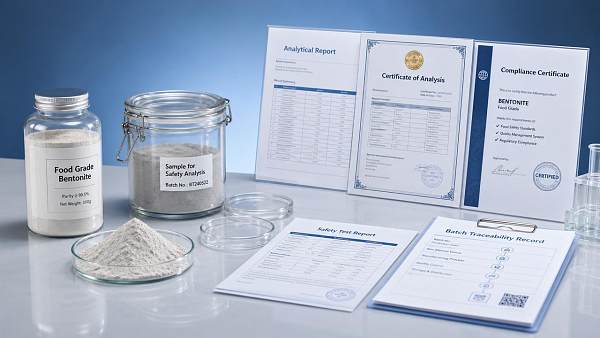
At a basic level, bentonite is a naturally occurring clay, largely composed of smectite minerals. Its value comes from adsorption, swelling behavior, and fine particle structure, which support specific processing functions.
Food grade does not mean universally safe under all conditions. It means the material is produced, tested, and documented to meet defined purity and safety expectations for intended food-related use.
This distinction is important because bentonite can be sold into very different markets. Industrial, cosmetic, pharmaceutical, and food-related grades may start from similar geology, yet they are not interchangeable from a compliance standpoint.
In practice, bentonite clay food grade evaluation should focus on three linked questions: what the material is, what it contains, and whether the documentation proves controlled manufacturing and legal market access.
Why verification has become more important
The pressure on verification is coming from several directions at once. Raw material sourcing is more global, regulator scrutiny is higher, and many businesses now expect digital proof trails for every critical input.
Mineral-derived ingredients create a particular challenge because contamination risk begins upstream. Deposits can vary by location, and processing conditions can influence microbiological status, particle consistency, and foreign matter control.
A second issue is specification drift. One certificate may show acceptable results for a single batch, while long-term control across lots remains unclear. That gap often appears during supplier qualification or external audit review.
This is where modern compliance systems matter. G-MST’s cross-sector emphasis on technical intelligence and TIC benchmarking reflects a reality shared by food-contact materials and smart global supply networks: documented control is now part of product quality itself.
The core evidence behind a credible approval decision
A reliable bentonite clay food grade review usually combines analytical data, supplier process transparency, and regulatory mapping. None of these elements is strong enough on its own.
Purity and identity
Start with identity confirmation. The mineral profile should match the declared bentonite type, and the specification should define moisture, ash profile, particle distribution, and relevant functional properties.
Purity also means understanding what is not supposed to be there. Unexpected silica forms, extraneous minerals, or residues from processing aids can change the risk profile quickly.
Contaminant limits
Heavy metals are usually the first checkpoint. Lead, arsenic, cadmium, and mercury should be measured against applicable limits, supported by current laboratory reports rather than old reference sheets.
Depending on use, additional concern may include microbiological load, dioxin-related risk, pesticide carryover, insoluble impurities, and other geogenic contaminants associated with the source deposit.
Traceability and change control
A strong file should connect mine source, processing site, batch identification, test record, and shipment information. If any part cannot be linked, the compliance picture is incomplete.
Change control deserves equal attention. A supplier may maintain the same product name while switching source ore, processing equipment, or subcontracted testing. Those changes can invalidate prior approvals.
How to read compliance without oversimplifying it
Compliance for bentonite clay food grade is rarely one document. It is a package of evidence aligned with the intended market, application, and local regulatory framework.
That usually includes a specification sheet, certificate of analysis, statement of compliance, safety data, manufacturing controls, and information on testing frequency and laboratory competence.
A useful rule is to avoid treating certificates as conclusions. They are inputs. The stronger decision comes from comparing documents against intended use, supplier history, and independent testing confidence.
Where bentonite clay food grade is evaluated in practice
The review process changes with the application. Bentonite used as a processing aid, filtration-related material, or food-contact functional input may face different documentation needs and risk thresholds.
In routine operations, bentonite clay food grade checks often appear in supplier onboarding, annual qualification review, incoming material release, deviation investigation, and export documentation review.
- New source approval requires broader due diligence than repeat purchasing.
- Cross-border shipments need closer review of jurisdiction-specific claims.
- Higher-risk applications justify confirmatory third-party testing.
- Audit preparation benefits from centralized digital document control.
This is one reason the subject fits a general industry audience. Mineral compliance now intersects with procurement systems, testing networks, data governance, and enterprise-level traceability tools rather than remaining a narrow raw-material issue.
A practical review framework for safer sourcing
A useful approach is to review bentonite clay food grade status in layers, moving from basic legitimacy to deeper technical confidence. This helps prevent both under-review and unnecessary paperwork.
Layer one: claim validation
Check whether the supplier clearly defines the grade, intended use, and market scope. Vague wording such as “suitable for food applications” is weaker than a precise compliance statement.
Layer two: technical file review
Assess specifications, contaminant data, test methods, frequency, and laboratory credibility. Look for internal consistency across documents, especially dates, batch references, and revision status.
Layer three: supplier system confidence
Review manufacturing controls, source stability, audit history, complaint handling, and change notification practices. A clean certificate cannot compensate for weak process governance.
Layer four: independent confirmation
For critical use cases, independent laboratory verification or TIC support adds confidence. This aligns with the G-MST view that credible industrial decisions increasingly depend on verified, comparable external evidence.
What deserves closer attention before final approval
Several warning signs tend to appear before a quality event or audit problem. None proves failure by itself, but each one should slow the approval process.
- Certificates that list pass results without numerical values.
- Missing detail on source deposit or processing location.
- Unclear difference between food grade and industrial product lines.
- Test reports issued too infrequently for a variable natural material.
- Compliance language copied across regions with no legal adaptation.
More importantly, the final judgment should stay tied to use context. Bentonite clay food grade acceptance for one process does not automatically justify approval for another process or another market.
Building a stronger decision process from here
The most effective next step is usually not adding more paperwork. It is defining a sharper internal standard for what counts as acceptable evidence, what requires escalation, and when independent verification becomes necessary.
For organizations handling bentonite clay food grade materials, that may mean aligning procurement records, laboratory review criteria, supplier change alerts, and audit-ready traceability into one decision path.
When the file is complete, bentonite clay food grade becomes easier to assess as a controlled compliance topic rather than a recurring uncertainty. That creates better sourcing discipline, cleaner audits, and a more reliable basis for long-term approval.
A careful review of specifications, contaminant data, market requirements, and TIC-backed evidence is usually the clearest place to begin. From there, each new supplier or batch can be judged against a standard that is consistent, practical, and defensible.
Tags
Recommended for You
 Bovine Collagen Powder Bulk: How to Evaluate Purity, Solubility, and Supply RiskBovine collagen powder bulk buying goes beyond a basic COA. Learn how to evaluate purity, solubility, and supply risk to reduce sourcing failures and choose a more reliable supplier.Jun 24, 2026Marcus Trust
 Feed & Grain Processing Technology: Key Upgrades for Higher ThroughputFeed & Grain processing technology upgrades can unlock higher throughput, lower energy use, and stronger control. Discover the key improvement areas that deliver measurable plant performance gains.Jun 24, 2026Lina Cloud
 Bulk Food Flavorings: Cost, Stability, and Shelf-Life Factors to CompareBulk food flavorings compared beyond price: learn how dosage, stability, shelf life, and supplier reliability affect true cost, product quality, and sourcing decisions.Jun 24, 2026Marcus Trust
 Bio Ingredients Trends in 2026: What’s Changing in Clean Label FormulationBio Ingredients trends in 2026 are reshaping clean label formulation through traceability, compliance, and multifunctional performance. Discover what’s changing and why it matters.Jun 24, 2026Marcus Trust
 How to Choose Hose Reel Irrigation Machines for Uneven FieldsHose reel irrigation machines for uneven fields: learn how to compare pressure stability, runoff control, mobility, and lifecycle cost to choose a more reliable, efficient system.Jun 24, 2026Lina Cloud
 Thai Industry Expo Highlights New Certification BarThai Industry Expo spotlights a new certification bar for education smart terminals, with ISO/IEC 27001 and IEC 62366-1 shaping Thailand market access from Q4 2026.Jun 24, 2026Professor Sarah Ed
 Hormuz Reopening Plan Fails to Ease Hardware Logistics PressureHormuz Reopening Plan Fails to Ease Hardware Logistics Pressure: rising insurance costs, ESG transport demands, and delivery risks are reshaping hardware exports. See what buyers and suppliers must do now.Jun 24, 2026Digital Signage
 AI Zone at 4th CISCE Signals New Buying ChecksAI Zone at 4th CISCE signals stricter buying checks as global buyers assess smart terminal suppliers on delivery capability and ISO/IEC certification readiness. See what exporters and procurement teams should review now.Jun 24, 2026Dr. Marcus Fin
 Fed Shifts to Data Dependence, Raising Gateway Settlement RiskFed shifts to data dependence, raising gateway settlement risk for cross-border payment gateways and payment flow systems. See how tighter dollar liquidity may lift FX, compliance, and rollout costs.Jun 24, 2026Dr. Marcus Fin
 India’s Rice Export Duty Hits Smart Grain Supply ChainsIndia’s Rice Export Duty reshapes smart grain supply chains, raising risks for procurement, delivery, and compliance. See how importers and integrators can adapt faster.Jun 24, 2026Digital Signage
 Best Bread Slicing Machine Commercial Options for Output, Safety, and CleaningBread slicing machine commercial buying guide: compare output, safety, and cleaning features to choose the best slicer for bakeries, cafés, delis, and foodservice.Jun 23, 2026Marcus Trust
 How to Read Calibration Uncertainty Data for Audit-Ready Test ResultsCalibration uncertainty data made simple: learn how to read certificates, assess tolerance risk, and turn measurements into audit-ready, traceable test results.Jun 23, 2026Marcus Trust
 Blood Meal Processing Plant Setup: Key Equipment, Yield, and Compliance RisksBlood meal processing plant setup starts with feedstock data, dryer selection, yield planning, and compliance control. Learn key equipment, odor and wastewater risks, and how to avoid costly delays.Jun 23, 2026Marcus Trust
 Lycopene Extract Bulk Pricing: What Affects Cost and MOQ in 2026Lycopene extract bulk pricing in 2026 depends on purity, origin, extraction method, compliance, and MOQ. Learn how to compare quotes smarter and reduce sourcing risk.Jun 23, 2026Marcus Trust
 How to Evaluate a Supplier Directory Platform for Faster Vendor ShortlistingSupplier Directory Platform evaluation starts with data credibility, filtering depth, and compliance context. Learn how to shortlist vendors faster and choose more reliable suppliers.Jun 23, 2026Lina Cloud
 Hainan Duty-Free Policy Cuts Taxes on Imported TerminalsHainan Duty-Free Policy cuts taxes on imported terminals, helping Industrial PDA, testing terminal, and ISO/IEC audit hardware buyers reduce costs, speed customs clearance, and optimize sourcing.Jun 23, 2026Digital Signage
 EU IPI Ruling Limits Chinese Content in Public TendersEU IPI ruling limits Chinese content in public tenders, setting a 50% cap on China-origin components. Learn how it impacts POS hardware, kiosks, digital signage, and EU project compliance.Jun 23, 2026Dr. Hideo Tanaka
 Summer Davos Opens in Dalian With New AI Hub and ESG SignalsSummer Davos in Dalian spotlights AI hubs, smart education terminals, and ESG certification. Discover what the new policy signals mean for compliance, sourcing, and cross-border growth.Jun 23, 2026Professor Sarah Ed
 China Unveils 15 Measures to Stabilize Foreign InvestmentChina Unveils 15 Measures to Stabilize Foreign Investment: explore how AI-ERP, Cloud CRM, cross-border data flows, and market access changes could reshape China entry strategy.Jun 23, 2026Lina Cloud
 US Grants 60-Day Waiver for Dollar Settlements on Iranian OilUS grants 60-day waiver for dollar settlements on Iranian oil, reshaping energy trade, compliance, and supply chain planning. See what manufacturers and traders must track now.Jun 23, 2026Dr. Marcus Fin
 CRM API Interoperability Data: Key Standards, Sync Issues, and Fix StrategiesCRM API interoperability data explained: learn key standards, common sync issues, and proven fix strategies to improve data trust, compliance, and cross-system performance.Jun 22, 2026Lina Cloud
 Global Education Equipment Investment Trends in 2026: Growth Areas and Risk SignalsGlobal education equipment investment in 2026 is shifting to smart classrooms, secure infrastructure, and compliant platforms. Discover top growth areas, regional signals, and hidden risks.Jun 22, 2026Professor Sarah Ed
 Drip Irrigation Systems Bulk: Cost Factors, MOQs, and Supply RisksDrip irrigation systems bulk buying can cut unit costs, but MOQs, freight, materials, and supplier risks shape real margins. Learn how to compare quotes smarter and source with confidence.Jun 22, 2026Lina Cloud
 How to Choose Inflatable Boat Fenders for Size, Stability, and Dock ProtectionInflatable boat fenders guide: learn how to choose the right size, shape, and material for better stability, safer docking, and reliable dock protection before you buy.Jun 22, 2026Marcus Trust
 Laboratory Research Basics: Methods, Metrics, and Common PitfallsLaboratory Research explained: discover core methods, key metrics, and common pitfalls to judge test credibility, reduce risk, and make smarter technical and business decisions.Jun 22, 2026Lina Cloud
 TÜV Rheinland ESG Rule Targets AI Carbon DisclosureTÜV Rheinland ESG rule now targets AI carbon disclosure for edtech suppliers. Learn how Germany’s 2026 public school bidding changes may affect compliance, verification, and market access.Jun 22, 2026Professor Sarah Ed
 ASEAN e-CO to Replace Paper CO in Six Southeast Asian MarketsASEAN e-CO will replace paper CO in six Southeast Asian markets from July 1, 2026. Learn how this change impacts RCEP tariff access, trade compliance, and smart terminal exports.Jun 22, 2026Digital Signage
 ISO/IEC 27001:2025 rollout starts for Cloud CRM and AI-ERPISO/IEC 27001:2025 rollout reshapes Cloud CRM and AI-ERP compliance. See key deadlines, new controls, and what overseas software vendors must do before June 2027.Jun 22, 2026Lina Cloud
 CPSC Halts Kiosk Imports Without UL 4700CPSC halts kiosk imports without UL 4700 certification. Learn how the new rule impacts self-service kiosks, compliance filings, test reports, and shipment planning.Jun 22, 2026Dr. Hideo Tanaka
 EU Mandates PCI-DSS 4.0 for POS Terminals from July 1EU mandates PCI-DSS 4.0 for POS terminals from July 1, 2026. Learn how the new EU compliance rule affects certification, customs clearance, and market access.Jun 22, 2026Dr. Marcus Fin
 Smart POS Terminal Trends in 2026: Features That Matter for ExpansionSmart POS terminal trends in 2026 reveal which features truly support expansion—cloud connectivity, compliance readiness, integration, and resilience across regions. Discover what to prioritize before rollout.Jun 21, 2026Dr. Marcus Fin
 Aquaculture Water Test Kits: Key Parameters to Check Before You BuyAquaculture water test kits: learn which parameters matter most before you buy, from dissolved oxygen and pH to ammonia, accuracy, usability, and long-term cost.Jun 21, 2026Marcus Trust
 What Affects Vending Machine Payment Success Rate Most in Daily OperationsVending machine payment success rate depends on network stability, terminal compatibility, software settings, and real site conditions. Learn what causes failures most and how to improve approvals faster.Jun 21, 2026Dr. Marcus Fin
 GDPR Data Privacy Metrics That Actually Help Reduce Compliance RiskGDPR data privacy metrics that matter most: learn which indicators truly reduce compliance risk, reveal weak controls, and improve privacy decisions across SaaS, payments, and smart terminals.Jun 21, 2026Marcus Trust
 How to Compare Agricultural Plastic Mulch Film by Crop, Thickness, and CostAgricultural plastic mulch film comparison made simple: match crop needs, film thickness, color, and total cost to improve field performance, reduce waste, and buy with confidence.Jun 21, 2026Lina Cloud
 Google Sets Hangzhou Cross-Border E-Commerce Hub for Q3 LaunchGoogle Sets Hangzhou Cross-Border E-Commerce Hub for Q3 Launch: learn how API integration, PCI-DSS v4.1 pre-checks, and multilingual marketing may reshape export readiness and buyer access.Jun 21, 2026Dr. Marcus Fin
 Germany Warns Against Gift-for-Five-Star Review TacticsGermany warns that gift-for-five-star review tactics may violate the UCPD. Learn the compliance risks, penalties, and what sellers and B2B brands in Germany should review now.Jun 21, 2026Digital Signage
 Magalu-Amazon Brazil Deal Raises Compliance BarMagalu-Amazon Brazil Deal Raises Compliance Bar: learn how INMETRO certification and NBR IEC 62368-1 shape Brazil market entry for electronics and appliance suppliers.Jun 21, 2026Dr. Marcus Fin
 Yandex Market Shifts to RMB Settlement on July 1Yandex Market shifts to RMB settlement on July 1, ending ruble account transactions. See how CNAPS + UnionPay requirements may impact suppliers, payments, and compliance.Jun 21, 2026Dr. Marcus Fin
 Russia to Enforce AI Toy Standard From SeptemberRussia to Enforce AI Toy Standard From September: learn how AI toys, STEM kits, and smart education devices may face new data privacy and child safety compliance rules in Russia.Jun 21, 2026Marcus Trust