For quality control and safety managers, industrial surfactants wholesale sourcing is not just about price—it is about verifying specifications that protect process stability, worker safety, and downstream compliance.
From active matter content and pH range to impurity limits, biodegradability, and regulatory documentation, every parameter can affect production reliability and risk exposure.
This guide outlines the quality specs that matter most when evaluating wholesale surfactant suppliers, helping teams make confident, data-driven procurement decisions.
Start With the Specs That Can Disrupt Production

The most important wholesale surfactant specifications are the ones that directly affect formulation performance, equipment compatibility, worker exposure, and finished-product compliance.
Quality teams should avoid treating a technical data sheet as a marketing document. It must be checked against process conditions and acceptance criteria.
For safety managers, the same specification may carry exposure implications. A narrow pH range, impurity limit, or flash point can change handling controls.
The best procurement decision is not necessarily the lowest unit price. It is the lowest total risk across quality, safety, logistics, and regulatory review.
Active Matter Content: The First Number to Verify
Active matter content indicates how much functional surfactant is present, excluding water, solvents, salts, or other non-active components in the supplied material.
In industrial surfactants wholesale purchasing, variation in active matter can alter dosage, foam behavior, detergency, emulsification, wetting, and batch consistency.
A lower-priced product may become expensive if higher dosing is required to achieve equivalent performance in the production line.
Quality teams should request the test method, typical range, guaranteed minimum, and historical batch data rather than relying only on a single nominal value.
For high-volume users, even small percentage shifts can affect inventory planning, cost per finished unit, and customer complaints.
pH Range and Compatibility With Your Process
The pH range matters because surfactants are often used in systems containing polymers, enzymes, pigments, metals, disinfectants, or sensitive additives.
A surfactant that performs well in one application can destabilize another if the pH drifts outside the expected operating window.
For QC teams, supplier specifications should define both the tested concentration and temperature used for pH measurement.
Safety managers should also consider corrosivity, storage compatibility, and the need for additional personal protective equipment during transfer or dilution.
When evaluating samples, test pH impact in the actual formulation, not only in deionized water or ideal laboratory conditions.
Impurity Limits: Small Contaminants, Large Consequences
Impurity limits are often where supplier quality becomes most visible. Residual monomers, salts, solvents, heavy metals, or by-products may affect downstream use.
Some impurities can cause discoloration, odor, foaming instability, filter blockage, corrosion, microbial growth, or reduced compatibility with other raw materials.
For regulated or export-oriented manufacturers, impurity control may also influence customer audits, restricted substance declarations, and market access documentation.
Wholesale buyers should ask which impurities are routinely tested, which are tested by risk, and which are controlled through process validation.
A useful certificate of analysis should include actual measured values, not only statements such as “conforms” or “within specification.”
Viscosity, Appearance, and Handling Behavior
Viscosity is not only a convenience parameter. It affects pumping, dosing accuracy, unloading speed, mixing time, and residue left inside containers.
Surfactants may become thicker or cloudy at lower temperatures, especially during winter transport or storage in unheated warehouses.
Quality specifications should define viscosity measurement temperature, instrument type, and acceptable range. Otherwise, comparisons between suppliers become unreliable.
Appearance standards should cover color, clarity, phase separation, sediment, odor, and any expected variation that does not affect performance.
Safety teams should review whether heating, agitation, or special unloading methods are needed, because these steps add operational risk.
Foam Profile Must Match the Application
Foam is beneficial in some cleaning, textile, and mining applications, but harmful in processes requiring fast rinsing, closed-loop circulation, or spray systems.
When sourcing industrial surfactants wholesale, buyers should not assume “more foam” means better surfactant performance.
QC teams should test foam height, foam stability, collapse time, and performance under actual water hardness, temperature, and mechanical agitation.
For antifoam-sensitive operations, uncontrolled foaming can cause tank overflow, inaccurate filling, pump cavitation, and production downtime.
The supplier should explain whether foam behavior is inherent to the surfactant chemistry or modified by additives that may vary by batch.
Biodegradability and Environmental Profile
Environmental specifications are increasingly important for industrial buyers, even when the product is not sold directly to consumers.
Biodegradability, aquatic toxicity, chemical oxygen demand, and restricted substance status may affect wastewater treatment load and permitting obligations.
Safety managers should ensure environmental claims are supported by recognized test methods, not broad descriptions such as “eco-friendly” or “green.”
For multinational operations, requirements may differ between regions, especially where detergents, emissions, or wastewater discharge rules are stricter.
A supplier with clear environmental data helps reduce uncertainty during customer questionnaires, sustainability audits, and internal EHS reviews.
Regulatory Documentation Is Part of the Product
For industrial chemicals, documentation should be treated as part of the delivered product, not as an optional administrative attachment.
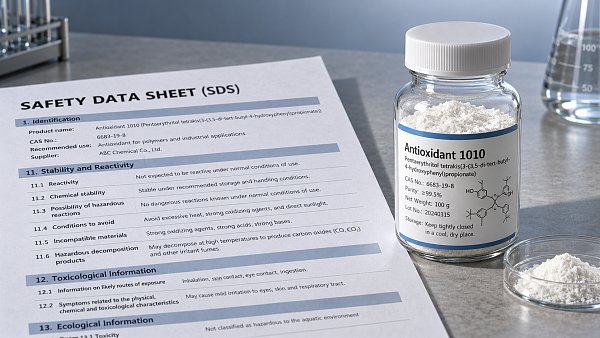
At minimum, buyers should expect a current safety data sheet, certificate of analysis, technical data sheet, and applicable regulatory declarations.
Depending on the market, additional documents may include REACH status, TSCA listing, food-contact statements, allergen declarations, or restricted substance confirmations.
Safety managers must verify that hazard classification, transport classification, exposure controls, and storage guidance are consistent across all documents.
If documentation is incomplete, outdated, or inconsistent, the supplier may create delays during audits, customs clearance, or internal material approval.
Batch Consistency and Change Control
Industrial users need consistency over time, not only a successful first sample. Batch-to-batch variation can quietly erode process control.
Wholesale suppliers should provide batch traceability, retained sample practices, shelf-life data, and clear rules for notifying customers about formulation changes.
Change control is especially important when surfactants are used in validated processes, customer-approved formulations, or regulated downstream applications.
QC teams should ask whether the supplier may change raw material sources, production sites, preservatives, solvents, or neutralizing agents without advance notice.
A strong supplier will define notification timelines, provide impact assessments, and support requalification before major specification changes occur.
Packaging, Storage, and Shelf-Life Specifications
Packaging quality influences contamination risk, moisture ingress, leakage, labeling accuracy, and safe movement inside warehouses or production plants.
Bulk containers, drums, IBCs, and tankers each require different controls for sealing, cleaning history, compatibility, and transport conditions.
Shelf-life should be supported by stability data, including temperature sensitivity, phase behavior, microbial risk, and preservative effectiveness where relevant.
Storage instructions should be practical, including recommended temperature range, freeze-thaw guidance, ventilation needs, and incompatible materials.
Safety managers should confirm that packaging labels match transport documents and SDS classifications, especially for hazardous or regulated shipments.
Supplier Qualification: What to Ask Before Buying at Scale
Supplier qualification should begin before price negotiation. The goal is to determine whether the supplier can reliably support your risk profile.
Ask for manufacturing location, quality certifications, testing capabilities, complaint handling process, audit availability, and previous experience in your application sector.
For industrial surfactants wholesale contracts, buyers should request representative samples from production batches, not only laboratory-prepared samples.
It is also useful to compare multiple batches over time, especially when the material will become a critical process input.
A supplier unwilling to disclose test methods, specification ranges, or change-control practices should be considered a higher-risk option.
How QC Teams Can Build an Acceptance Checklist
A practical acceptance checklist converts supplier promises into measurable incoming inspection criteria for each shipment or batch.
The checklist should include product name, grade, batch number, active matter, pH, appearance, viscosity, impurity limits, packaging condition, and document review.
Not every parameter needs full retesting at receipt, but critical parameters should be verified based on risk and supplier history.
High-risk or new suppliers may require more frequent laboratory testing until performance data supports reduced inspection.
Acceptance criteria should be aligned with internal formulation tolerances, not copied blindly from supplier brochures.
Safety Review Should Happen Before Commercial Approval
Safety review should occur before the purchasing team commits to large volumes, because handling requirements can change true operating cost.
Review inhalation, skin, eye, flammability, reactivity, and environmental hazards together with likely exposure scenarios in your facility.
Consider unloading, sampling, dilution, mixing, spill response, waste disposal, and maintenance activities, not only normal closed-system operation.
If a surfactant requires additional ventilation, spill containment, training, or protective equipment, those needs should be included in sourcing decisions.
A technically suitable surfactant may still be unsuitable if it increases unacceptable workplace risk or requires controls the facility cannot maintain.
Price Evaluation Should Be Based on Total Delivered Value
Wholesale pricing should be compared on a normalized basis, such as cost per kilogram of active matter or cost per functional dose.
Freight terms, packaging return costs, minimum order quantities, lead time, shelf-life losses, and testing burden can change the real cost.
A cheaper product with variable quality may increase rework, downtime, customer complaints, waste treatment cost, and emergency procurement exposure.
For strategic materials, procurement should weigh supplier reliability, documentation quality, technical support, and regulatory readiness alongside unit price.
The strongest sourcing decision is the one that protects production continuity while meeting safety and compliance requirements at a sustainable cost.
Red Flags When Reviewing Wholesale Surfactant Offers
Several warning signs should trigger deeper review before approving a supplier or placing a large order.
Be cautious when a supplier provides vague specifications, missing test methods, inconsistent SDS information, or certificates without actual measured values.
Unusually broad specification ranges may indicate weak process control, variable raw materials, or an attempt to reduce rejection risk.
Frequent changes in product name, grade, origin, or documentation format can also complicate traceability and audit readiness.
If the supplier pressures quick purchase without allowing technical review, the apparent discount may conceal avoidable operational risk.
Conclusion: Buy Specifications, Not Just Surfactants
For quality control and safety managers, industrial surfactants wholesale sourcing should be managed as a technical risk decision.
The most important specs include active matter, pH, impurities, viscosity, foam profile, biodegradability, regulatory documents, and batch consistency.
Strong suppliers make these parameters transparent, support them with recognized test methods, and maintain reliable change-control procedures.
Before scaling purchases, align supplier specifications with your process limits, safety controls, environmental obligations, and customer requirements.
When teams buy verified performance rather than only low price, they protect production stability, reduce compliance surprises, and improve long-term sourcing value.