[FIN]CROSS-BORDERVOL: $4.2T
[SEC]CYBER ALERT: TIER2
[POL]IS0 GROWTH:+14%
[GEO] CLOUDINDEX: +2.4%
Structural Logic
Category Filters
How to Choose a Cross-border Payments Platform for Lower Fees
Lead Author
Published
Views:
Lower fees are often the headline reason to review a Cross-border Payments platform, but cost alone rarely tells the full story. In global purchasing flows, payment choice shapes FX exposure, settlement speed, supplier trust, reconciliation effort, and compliance risk. A platform that looks inexpensive on paper can become costly once markups, delays, failed transfers, and manual interventions are included.
That matters across a broad commercial landscape. Retail groups, SaaS operators, education networks, terminal distributors, and certification providers all move money across borders under different timelines and controls. In a market shaped by digital service infrastructure, smart terminals, and stricter rules around data and payments, selecting the right Cross-border Payments platform is now a sourcing decision with operational consequences.
What a Cross-border Payments platform really covers
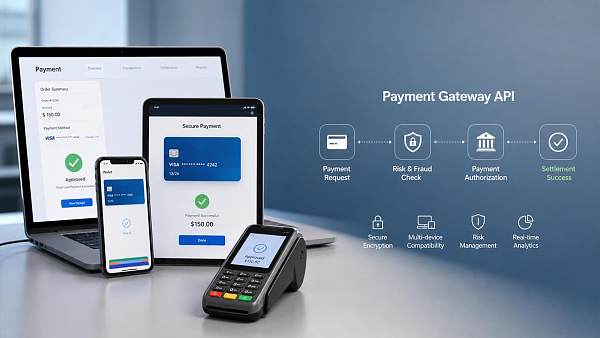
A Cross-border Payments platform is more than a transfer tool. It is the system that manages how funds move between countries, currencies, financial institutions, and counterparties.
It usually combines several layers: FX conversion, payout routing, settlement timing, compliance screening, API or ERP integration, reporting, and exception handling.
This wider view is important because fees appear in several places. Some are visible, such as transaction charges. Others sit inside exchange spreads, intermediary deductions, treasury buffers, or support costs.
For organizations comparing providers through a technical intelligence lens, the platform should be treated like any other critical infrastructure layer. It needs measurable performance, regulatory discipline, and compatibility with upstream business systems.
Why fee pressure is rising now
Cross-border payments have become more complex, not less. Procurement cycles are global, suppliers expect faster settlement, and finance teams want better cash visibility.
At the same time, FX volatility remains a moving target. A small markup on a frequent payment corridor can outweigh any advertised transaction discount.
There is also a structural shift in how international commerce operates. SaaS subscriptions, smart terminal deployments, remote services, spare parts logistics, and certification workflows often require smaller but more frequent international payments.
That pattern changes the evaluation model. A provider built for occasional bank transfers may not be efficient for recurring multi-country disbursements tied to digital operations.
From the perspective of institutions such as G-MST, which track payment infrastructure alongside SaaS, POS, EdTech, and TIC ecosystems, the real issue is not only price. It is whether the payment layer supports scalable, standards-aware commerce.
Where the real costs usually hide
A useful selection process starts by separating direct fees from embedded costs. Many providers advertise low transfer rates while recovering margin elsewhere.
A strong Cross-border Payments platform reduces all five categories together. If it only lowers one line item, the savings may not be real.
Selection criteria that matter in practice
Pricing transparency before headline rates
Ask for a corridor-level pricing view, not a generic rate card. The useful comparison is payment route by route, currency by currency, and volume by volume.
The best providers disclose transfer fees, FX methodology, timing of rate locks, local payout charges, and refund rules. If those items are vague, future disputes are likely.
Local rails and settlement architecture
Platforms using local clearing rails in destination markets often deliver lower cost than routes dependent on multiple correspondent banks.
This is especially relevant for frequent payouts to distributors, software vendors, logistics partners, installation teams, or certification bodies in different jurisdictions.
Integration with business systems
A Cross-border Payments platform should fit the operating environment, not sit outside it. Integration with ERP, treasury tools, procurement software, and invoicing systems reduces manual work.
In organizations managing smart terminals or digital service contracts, reconciliation quality can be as valuable as lower fees. Clean data reduces missed approvals and duplicate payments.
Compliance depth, not just compliance claims
International payments operate under growing scrutiny. Sanctions screening, AML controls, data governance, audit trails, and regional privacy requirements all affect platform suitability.
For cross-functional environments aligned with standards such as PCI-DSS and GDPR, compliance must be documented, current, and operationally usable.
Different payment scenarios need different strengths
The right Cross-border Payments platform depends on payment behavior. One model rarely performs equally well across all use cases.
- High-value supplier payments need strong FX control, approval workflows, and predictable settlement windows.
- Frequent low-value payouts need efficient local rails and low fixed charges.
- Project-based global deployments need batch payments, status visibility, and country-specific document handling.
- Service subscriptions and recurring contracts need automation, reconciliation detail, and reliable exception management.
This is where broad-sector intelligence becomes useful. A platform suitable for hardware distribution may not be ideal for EdTech licensing or TIC-related certification payments, even if both are cross-border.
Questions worth asking during evaluation
A shorter provider list becomes more meaningful when the review team asks operational questions rather than marketing ones.
- What is the effective cost by top five payment corridors over the last quarter?
- How often does the provider use intermediary banks for those corridors?
- Can rates be locked at invoice approval or only at payment execution?
- Which local payout methods are supported for each destination market?
- How are failed transfers, returns, and beneficiary data errors handled?
- What reporting fields are available for ERP matching and audit reviews?
Answers to these questions reveal whether the Cross-border Payments platform is built for sustained procurement operations or only for simple remittance-style transfers.
How to compare providers without losing context
A practical scoring model balances cost, control, and fit. Simple price rankings often favor providers that shift complexity back to internal teams.
In many cases, the lowest-cost option is the provider that removes hidden friction across the full payment lifecycle, not the one with the cheapest visible fee.
A sensible next step
Choosing a Cross-border Payments platform for lower fees starts with better definitions of cost. Map the top payment corridors, payment types, currencies, and recurring exceptions first.
Then compare providers against actual transaction patterns, not average assumptions. In parallel, review how each platform supports data quality, regulatory controls, and system integration.
For organizations operating across digital services, smart terminal ecosystems, and global compliance environments, the best decision usually comes from a structured benchmark. Cost matters, but durable savings come from a platform that makes international payments clearer, faster, and easier to govern.
That creates a strong basis for the next round of evaluation: shortlist by corridor economics, validate operational fit, and test the Cross-border Payments platform against real workflows before committing at scale.
Tags
Recommended for You
 Synthetic Fragrances Bulk: How to Balance MOQ, Stability, and Supply RiskSynthetic fragrances bulk sourcing is not just about price. Learn how to balance MOQ, stability, and supply risk to avoid delays, reduce waste, and choose a supplier that performs reliably at scale.Jun 18, 2026Lina Cloud
 Vacuum Packing Machine for Fish: Key Checks Before Comparing Price QuotesVacuum packing machine for fish buyers: check sealing, vacuum stability, hygiene design, durability, and support before comparing price quotes to avoid hidden costs.Jun 18, 2026Marcus Trust
 What Phytase Enzyme Feed Grade Does in Animal Nutrition and Cost ControlPhytase enzyme feed grade helps unlock bound phosphorus, reduce inorganic phosphate costs, and improve feed efficiency. Learn how it supports animal nutrition, compliance, and smarter cost control.Jun 18, 2026Marcus Trust
 Enclosed Belt Conveyor vs Open Conveyor: Which Reduces Dust and Product LossEnclosed belt conveyor vs open conveyor: discover which system better cuts dust, reduces product loss, improves compliance, and lowers cleanup costs for long-term ROI.Jun 18, 2026Marcus Trust
 How to Choose a Black Pepper Grinding Machine for Output and Grind ConsistencyBlack pepper grinding machine selection starts with output and grind consistency. Learn how to compare capacity, heat control, hygiene, and operating cost for better results.Jun 18, 2026Lina Cloud
 ISO/IEC 27001:2025 Transition Starts for Cyber Security ExportsISO/IEC 27001:2025 transition begins for Cyber Security exports, with mandatory certification updates by Dec 15, 2026. Learn how AI governance, cloud-native security, and supply chain risk may affect bids.Jun 18, 2026Lina Cloud
 Hebei Builds First Smart POS Export Logistics HubHebei Builds First Smart POS Export Logistics Hub, accelerating POS hardware and Industrial PDA exports with faster customs clearance. Discover what it means for JIT delivery, exporters, and buyers.Jun 18, 2026Digital Signage
 North America POS Localization Cuts Delivery to Under 8 WeeksNorth America POS localization is cutting Terminal Logic delivery to under 8 weeks. See how local warehousing, AI OTA updates, and built-in security can speed deployment and boost buyer confidence.Jun 18, 2026Dr. Hideo Tanaka
 Day-One Demand Targets Kiosks and Digital SignageSelf-Service Kiosks and Digital Signage drew strong day-one demand at the 2026 Cross-Border Trade Fair, with buyers prioritizing compliance, local-language UI, and installation support.Jun 18, 2026Dr. Hideo Tanaka
 Outbound Investment Rules Lift Compliance Bar for SaaS ExportsOutbound investment rules lift the compliance bar for SaaS exports, pushing payment gateways and cloud CRM teams to address data sovereignty, local storage, PCI-DSS, and ISO 27001 readiness.Jun 18, 2026Dr. Marcus Fin
 Is 4K or 8K Better for Lecture Capture Video Quality?Lecture capture video quality (4k/8k): discover why 4K is the smarter choice for most classrooms, when 8K adds value, and how to balance quality, cost, and scalability.Jun 17, 2026Professor Sarah Ed
 GMP Compliance Checklist: Key Gaps That Delay CertificationGMP Compliance gaps often hide in SOPs, training, validation, and traceability. Discover the key checklist items that delay certification and how to fix them before your next audit.Jun 17, 2026Marcus Trust
 Commercial Fish Netting: How to Choose Mesh Size and MaterialCommercial fish netting guide to choosing the right mesh size and material. Learn how to improve catch performance, meet compliance rules, and reduce long-term operating costs.Jun 17, 2026Marcus Trust
 Silage Bale Wrapper Machine Buying Guide: Cost, Output, and Film UseSilage bale wrapper machine buying guide covering cost, real output, and film use. Compare wrapper types, reduce forage loss, and choose a reliable machine with confidence.Jun 17, 2026Lina Cloud
 How Generative AI Is Changing Classroom Teaching and AssessmentImpact of generative AI on classrooms: discover how AI is reshaping teaching, assessment, infrastructure, and compliance—helping schools improve learning outcomes and make smarter EdTech decisions.Jun 17, 2026Professor Sarah Ed
 Cross-Border Fair to Host Kiosk and Signage Buyer SessionsCross-Border Fair to Host Kiosk and Signage Buyer Sessions in Fuzhou, connecting global buyers with compliant Chinese suppliers for self-service kiosks, digital signage, and ODM deals.Jun 17, 2026Dr. Hideo Tanaka
 Licensing Upgrade Strengthens Ocean Delivery for Terminal Logic and Industrial PDATerminal Logic and Industrial PDA shipments gain a potential edge as Yiwu’s new ocean licensing boosts route planning and delivery stability for Europe and Latin America ODM orders.Jun 17, 2026Dr. Hideo Tanaka
 BOJ at 1% Opens Repricing WindowBOJ at 1% opens a repricing window for Japanese buyers of Cyber Security and ISO/IEC auditing services. See how yen expectations may reshape Q3 procurement, contract timing, and compliance planning.Jun 17, 2026Marcus Trust
 US Import Prices Raise Pressure on Payment GatewaysPayment Gateways face rising cost pressure as U.S. import prices climb, impacting POS hardware, Cloud CRM deployments, and channel margins. See what importers should do now.Jun 17, 2026Dr. Marcus Fin
 Customs Document Vault Speeds POS Hardware ExportsCustoms Document Vault speeds POS Hardware exports with blockchain-based verification, helping cut clearance delays, reduce document disputes, and improve delivery reliability.Jun 17, 2026Dr. Marcus Fin
 Industrial Integrity Explained: Key Risks, Standards, and Control PrioritiesIndustrial Integrity explained: discover key risks, core standards, and control priorities that help improve safety, compliance, traceability, and operational trust.Jun 16, 2026Marcus Trust
 Business Intelligence Tool Factory vs Custom BI Development: What Matters MostBusiness intelligence tool factory or custom BI development? Compare speed, governance, integration, and cost to choose the right analytics model for scalable growth.Jun 16, 2026Lina Cloud
 Payment Gateway API Integration Services: Cost, Risk, and Delivery FactorsPayment Gateway API integration services explained: compare cost, compliance risk, device readiness, and delivery factors to choose a safer, scalable payment integration path.Jun 16, 2026Dr. Marcus Fin
 Agri & Forestry Pest Control: Common Field Failures and Practical FixesAgri & Forestry pest control often fails due to poor timing, weak coverage, and misidentification. Discover practical field fixes to improve results, reduce repeat spraying, and protect crop and forestry performance.Jun 16, 2026Lina Cloud
 How to Choose an Outdoor Digital Signage Factory for Long-Term ReliabilityOutdoor digital signage factory selection affects uptime, durability, and lifecycle cost. Learn how to compare manufacturing, weatherproofing, compliance, and support for long-term reliability.Jun 16, 2026Digital Signage
 Newland’s Overseas POS Orders Hit Capacity in Q1 2026Newland’s Overseas POS Orders Hit Capacity in Q1 2026 as Latin America deliveries stretch to Q4. See how compliance coverage, licensing, and deployment readiness now shape global POS execution.Jun 16, 2026Dr. Marcus Fin
 Blockchain Trade Vault Speeds POS Hardware ExportsBlockchain Trade Vault speeds POS hardware exports by enabling on-chain document storage, trusted buyer verification, and faster customs clearance. See how exporters can cut delays and improve compliance.Jun 16, 2026Dr. Marcus Fin
 Cross-Border Fair Debuts ODM Zone for POS and KiosksCross-Border Fair Debuts ODM Zone for POS and Kiosks, spotlighting compliance-ready customization for global buyers. Explore how EMV, PCI-PED, and export services can speed sourcing and delivery.Jun 16, 2026Dr. Marcus Fin
 Shanghai Pushes Global Asset Management With Blockchain BaseShanghai pushes global asset management with a blockchain base for cross-border RMB asset ownership, smart contract settlement, and ISO/IEC audit readiness—see what it means for funds, vendors, and compliance teams.Jun 16, 2026Dr. Marcus Fin
 China Rule Tightens Account Checks for Gateways and CRMChina tightens account checks for Payment Gateways and Cloud CRM from Sept. 2026. Learn how the new rules impact supplier compliance, onboarding, and channel partner risk.Jun 16, 2026Dr. Marcus Fin
 Canton Fair Phase III Ends With Terminal Logic in FocusCanton Fair Phase III highlights Terminal Logic as a new pricing and procurement benchmark for smart devices. See why POS, kiosks, and signage suppliers should act now.Jun 15, 2026Dr. Hideo Tanaka
 NRF APAC 2026 Ends With POS and Kiosk Compliance in FocusPOS and kiosk compliance takes center stage after NRF APAC 2026. Discover how PCI-DSS 4.0, GDPR, AI POS hardware, and multilingual self-service kiosks are reshaping retail procurement.Jun 15, 2026Dr. Marcus Fin
 China Opens Fast-Track Export Compliance for Smart TerminalsChina opens fast-track export compliance for smart terminals, cutting audit cycles to 5 days for POS hardware, kiosks, and digital signage. See how exporters can speed certification and delivery planning.Jun 15, 2026Marcus Trust
 US Starts AI Export Pre-Screening for ERP and Cloud CRMUS Starts AI Export Pre-Screening for ERP and Cloud CRM: learn how NIST AI RMF 2.0, compliance checks, and 8–12 week reviews could impact exports, procurement, and delivery plans.Jun 15, 2026Lina Cloud
 SG-Mark 2.0 Takes Effect for Industrial PDAs in SingaporeSG-Mark 2.0 takes effect for Industrial PDAs in Singapore, making IMDA cybersecurity certification essential for import, deployment, and network access. See who is affected and what to do now.Jun 15, 2026Digital Signage
 Aquaculture Production Trends in 2026: Costs, Output, and Risk SignalsAquaculture production in 2026 faces rising costs, uneven output, and earlier risk signals. Explore margin pressure, disease exposure, and smarter strategies shaping the market.Jun 15, 2026Marcus Trust
 Wholesale Saw Palmetto Extract: How to Check Quality Before OrderingWholesale saw palmetto extract buyers should verify identity, active profile, contaminants, batch consistency, and compliance records before ordering bulk.Jun 15, 2026Marcus Trust
 Barley Peeling Machine Buying Guide: Capacity, Waste, and MaintenanceBarley peeling machine buying guide covering real capacity, waste control, and maintenance costs. Learn how to compare suppliers, reduce grain loss, and choose a reliable machine.Jun 15, 2026Lina Cloud
 How to Evaluate Bulk PVC Foam Buoys for Marine UsePVC foam buoys bulk buying requires more than a low quote. Learn how to compare buoyancy, UV resistance, durability, and supplier reliability for safer marine performance.Jun 15, 2026Marcus Trust
 PCI DSS Compliance Tools: Key Features to Compare in 2026PCI DSS compliance tools compared for 2026: discover the key features, integrations, automation, and evidence workflows that help teams reduce risk and choose smarter.Jun 15, 2026Lina Cloud